If you’ve ever scrolled through your phone before bed, you’ve probably heard the warnings. Blue light from screens is ruining your sleep. It’s keeping you awake. It’s messing with your brain chemistry. Maybe you’ve even felt guilty about those late-night Netflix sessions or the inevitable Instagram check right before lights out.
The concern is everywhere. Blue light blocking glasses are a booming business. Phone manufacturers now include night mode settings as standard features. Sleep experts routinely tell us to put our devices away hours before bedtime.
But here’s the thing: not all of the panic is based on what the science actually shows. Some of it is real and worth paying attention to. Some of it is overblown. And some of the advice floating around completely misses the bigger picture about why screens might be affecting your sleep in the first place.
The truth is more interesting than the simple story we usually hear. Yes, blue light does something to your body’s internal clock. But the light itself might not be the main villain in your bedroom. The real question isn’t just whether blue light is bad for sleep. It’s about understanding what’s actually happening when you use screens before bed, and what’s worth worrying about versus what’s just noise.
Let’s sort through what we know, what we don’t, and what actually matters when it comes to your devices and your rest.
Blue light is a type of light your brain treats like daytime
Blue light isn’t some mysterious ray that only comes from screens. It’s actually just one color in the rainbow of visible light that hits your eyes every day. Sunlight is packed with it. That bright, clear quality of a sunny morning? That’s partly blue light at work.
What makes blue light different from, say, red or yellow light is its energy level. Blue wavelengths carry more punch. They’re shorter and more energetic than warmer colors. This isn’t a bad thing. In fact, your brain has learned to use blue light as a signal.
For most of human history, blue light meant one thing: the sun is up. Your eyes detect it, and your brain gets the memo that it’s time to be awake and alert. This is why blue light gets singled out when we talk about sleep. It’s not toxic or dangerous. It’s just really good at telling your body that daytime is happening.
The problem is that we now have blue light available at night. LED bulbs emit it. Phone screens glow with it. Your laptop, your tablet, even some alarm clocks beam it straight into your eyes after dark. Your brain doesn’t know the difference between blue light from the sun and blue light from your phone. It just knows: blue light equals daytime.
So when you’re scrolling through your phone at 11 p.m., your brain is getting mixed messages. The clock says sleep, but the light says stay awake. That’s where the tension starts.
The main sleep effect is delayed sleepiness, not instant insomnia
Here’s what actually happens when you scroll through your phone before bed. Your body doesn’t suddenly forget how to sleep. Instead, the light from your screen quietly pushes back the moment when you start feeling drowsy.
Think of it like this: your brain has an internal clock that usually starts winding down for sleep around the same time each evening. Blue light from screens can nudge that clock forward, delaying the release of melatonin, the hormone that makes you feel sleepy. It’s not that melatonin disappears completely. It just shows up later than it normally would.
For most people, this doesn’t mean tossing and turning all night. What it often looks like is staying up later than you planned, taking longer to actually drift off once you’re in bed, or feeling alert when you expected to feel tired. Your sleep routine gradually shifts later and later.
The tricky part is that this effect isn’t the same for everyone. Some people can watch TV until midnight and fall asleep immediately. Others notice that even a quick email check at nine o’clock makes them wired until well past their usual bedtime. Age, natural sleep patterns, and how sensitive your eyes are to light all play a role.
The real problem isn’t one late night of screen time ruining your sleep forever. It’s the slow drift that happens when your evening light exposure consistently delays your body’s sleepiness signal. You might not even notice it’s happening until you realize you’re going to bed an hour later than you used to.
Screens before bed keep you awake in other ways too
Even if you’ve got the best blue light filter money can buy, your phone might still be sabotaging your sleep. The light itself is only part of the story.
Think about what you’re actually doing on that screen. Scrolling through social media gets your mind racing as you compare yourself to others or react to someone’s hot take. Playing a game triggers competitive feelings and keeps your brain in problem-solving mode. Checking work email right before bed is practically asking your mind to replay tomorrow’s meetings instead of winding down.
Then there’s the emotional side. Doom-scrolling through stressful news doesn’t exactly put you in a peaceful state of mind. An argument in the group chat can leave you replaying what you should have said. Even something as simple as an exciting text conversation can rev up your nervous system when it should be shifting into sleep mode.
There’s also the time problem. You tell yourself you’ll watch one quick video, and suddenly it’s forty minutes later. The algorithm knows exactly how to keep you hooked, and your sleep window just got a lot smaller.
That said, not all screen time before bed affects everyone the same way. Some people genuinely relax by reading a calm ebook or listening to a gentle podcast. The difference usually comes down to whether the activity winds you up or winds you down. If you’re mentally engaged, emotionally stirred up, or losing track of time, that’s when screens become a real problem for sleep. The blue light might get all the attention, but what’s happening in your head often matters more.
When blue light matters more, and when it probably doesn’t
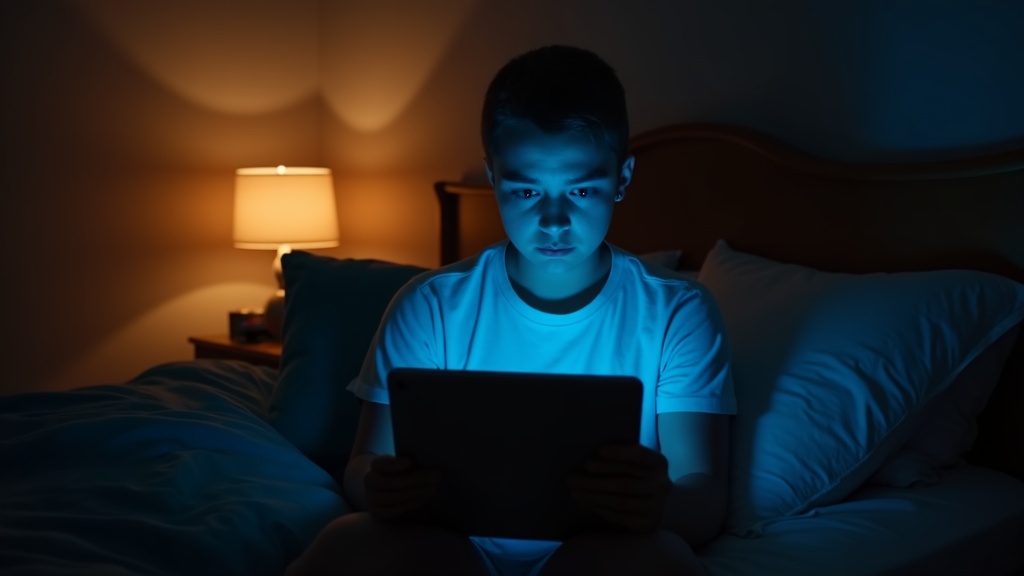
If you’re lying in bed scrolling through a bright screen in a dark room at midnight, blue light is probably working against you. The contrast matters. Your eyes are adjusted to darkness, and suddenly you’re flooding them with light that mimics midday. That’s when the melatonin suppression really kicks in.
Blue light also tends to be more of an issue if you already struggle to fall asleep, or if your schedule is all over the place. Shift workers, students pulling late nights, and anyone who can’t keep consistent sleep times are more vulnerable. Your body is already confused about when to wind down, and bright screens just add to the mixed signals.
On the flip side, scrolling at seven in the evening with your brightness turned down probably isn’t your main sleep problem. If you’re using devices earlier and you’re still sleeping fine, you’re likely okay. Same goes if you’re someone who falls asleep easily no matter what.
Here’s the thing most people miss: blue light might not even be your biggest issue. If you’re drinking coffee at eight at night, or your mattress feels like a pile of rocks, or you’re lying awake stressing about tomorrow’s meeting, those are bigger deals. A lot of us get fixated on screens because it feels like something we can control, but sometimes the real culprit is more obvious.
The best approach is to notice what actually disrupts your sleep, not what theoretically could. If cutting screens an hour before bed makes a clear difference, great. If it doesn’t, look elsewhere. Chase the friction that matters most to you, not every possible factor on the internet.