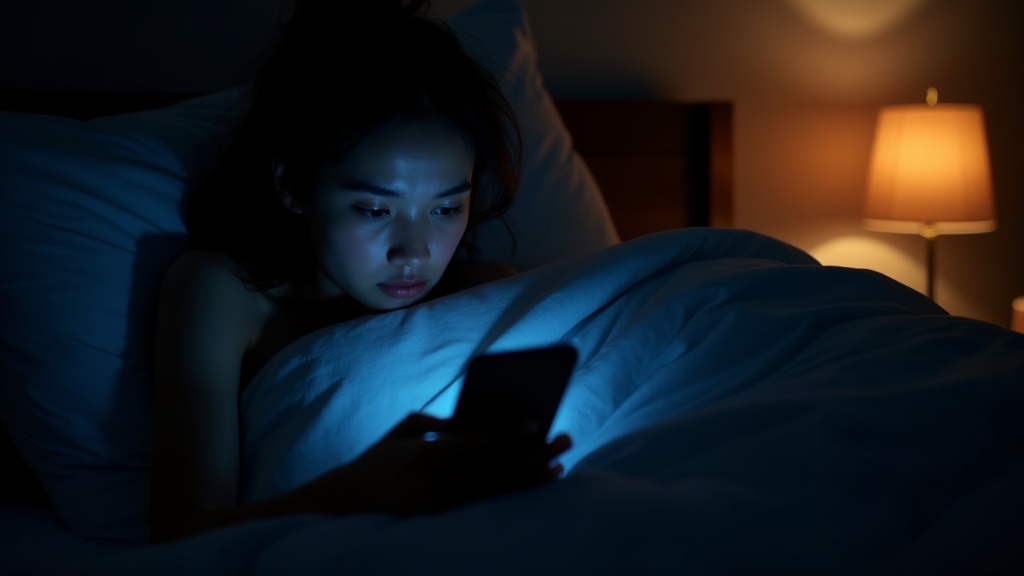
You’ve probably experienced it before. You scroll through your phone in bed, finally put it down, turn off the lights, and then just lie there. Wide awake. Your body feels tired, but your brain won’t cooperate.
The culprit might be blue light, a type of light that your phone, tablet, and laptop screens emit in large amounts. Blue light isn’t harmful in the way UV light is. The problem is what it does to your internal clock.
Your brain uses light as a signal to figure out whether it’s day or night. Blue light, in particular, tells your brain it’s daytime. When you stare at a bright screen before bed, you’re essentially sending your brain mixed messages. Your surroundings say it’s time to sleep, but the light from your screen says it’s time to be alert.
This confusion affects melatonin, the hormone that makes you feel sleepy. Blue light can suppress melatonin production, which means you might feel less drowsy even when you’re genuinely tired. The result is that falling asleep takes longer, and the sleep you do get might not feel as refreshing.
Here’s the tricky part: not everyone responds to blue light the same way. Some people can watch TV right up until bedtime and fall asleep instantly. Others notice a clear difference when they avoid screens for an hour before bed. Age, genetics, and even how sensitive your eyes are to light all play a role in how much blue light affects you personally.
How blue light can delay melatonin and shift your sleep timing
Your body has a built-in clock that tracks roughly when it should be awake and when it should sleep. This clock relies on signals from the world around you, and light is by far the most important signal it uses.
When evening arrives and the sun goes down, your brain starts releasing a chemical messenger called melatonin. Think of melatonin as your body’s way of saying “it’s getting dark, time to wind down soon.” It doesn’t knock you out like a sleeping pill. Instead, it gently nudges your system toward sleepiness over the course of an hour or two.
Here’s the problem: your brain can’t tell the difference between the sun and your phone screen. Both give off blue light, which is the type of light most strongly linked to daytime. When you scroll through your phone or watch TV late at night, that blue light tells your brain “wait, it’s still daytime.” In response, your brain holds off on releasing melatonin.
The result is predictable. You don’t start feeling sleepy at your usual time. You might lie in bed feeling wired, or find yourself staying up later than you planned. When you finally do fall asleep, your whole sleep schedule has shifted forward. The next morning, your alarm goes off but your body hasn’t finished its sleep cycle. You wake up groggy, because as far as your internal clock is concerned, it’s still the middle of the night.
This isn’t just about one bad night. Do this regularly, and your body clock can drift later and later, making it harder to fall asleep at a reasonable hour even when you want to.
Why some people feel it more than others
If you’ve ever wondered why your friend can scroll through their phone at midnight and fall asleep instantly while you lie awake for hours after doing the same thing, you’re not imagining it. People really do respond differently to blue light exposure before bed.
Part of it comes down to whether you’re naturally a night owl or an early bird. Night owls tend to have circadian rhythms that run a bit later anyway, so their bodies might be less jarred by light exposure in the evening. Early birds, on the other hand, may find that even a little screen time pushes their sleep window later than feels comfortable.
The practical details matter too. Holding your phone six inches from your face in a dark room creates a much stronger effect than glancing at a laptop across the room with a lamp on. The brightness of your screen, the darkness of your surroundings, and how close you are to the display all change how much blue light actually reaches your eyes.
Timing plays a role as well. Looking at screens at 9 pm might not affect you much, but the same activity at 11 pm could make falling asleep harder. Your body is more sensitive to light cues as your natural bedtime approaches.
Younger people, especially teens and those in their twenties, often seem more sensitive to these effects. And if you’re already running on too little sleep, blue light exposure can feel even more disruptive. When your sleep system is already strained, it doesn’t take much to throw it further off balance.
If you have a regular sleep schedule, your body adapts and may handle the occasional late-night screen session better than someone whose bedtime varies wildly from night to night.
Common sleep problems linked to late-night screen use
If you find yourself lying in bed for thirty minutes or more before sleep actually arrives, your evening screen time might be playing a role. Many people notice they feel tired earlier in the evening, but then get a second wind after scrolling through their phone or watching a show. That burst of alertness can push your natural sleepiness past its window.
You might also notice a pattern of sleeping later than you intended, even when you need to wake up early. Your body wants to sleep on its own schedule, which screen exposure keeps nudging forward bit by bit. The result is often hitting snooze repeatedly or feeling groggy when you finally do get up.
Some people get their seven or eight hours but still wake up feeling like they didn’t really rest. The sleep itself can feel lighter and more fragmented. You might stir more often during the night or remember more dreams than usual, signs that you’re spending less time in the deeper stages of sleep.
Weekends can actually make this worse, not better. When you try to catch up by sleeping in on Saturday and Sunday, you end up going to bed even later those nights. Then Monday arrives and your body is on an even later schedule than it was the week before.
None of this means screens are the only reason you might have trouble sleeping. Stress, caffeine, room temperature, and dozens of other factors matter too. But if these patterns sound familiar and you spend your evenings looking at bright screens, the connection is worth considering.
How to reduce blue light without giving up screens
The good news is you don’t need to ditch your devices at sunset. Small adjustments to how you use screens can make a real difference.
Start with your screen brightness. Dimming your display in the evening is one of the simplest changes you can make. Many people keep their phones and laptops at full brightness all day, which blasts your eyes with light when you’re winding down. Turn it down lower than feels necessary at first. Your eyes will adjust within a minute or two.
Most devices now include a night mode or warm color setting. This shifts the screen from blue-white to amber or orange tones. It’s not a perfect solution, but it does reduce the wavelengths that most affect your internal clock. Some people notice they fall asleep easier when using it. Others don’t feel much difference. It’s worth trying for a few nights to see if it helps you.
Distance matters more than most people realize. Holding your phone six inches from your face delivers much more light to your eyes than watching TV across the room. If you’re scrolling before bed, try keeping your phone at arm’s length instead of up close.
The light around you plays a role too. If you’re using a bright screen in a pitch-black room, the contrast is jarring. Switching to warmer, dimmer lighting in your bedroom or living room can ease the transition to sleep. Think soft lamps instead of overhead lights.
Here’s the thing though: brightness often matters as much as color. A dimmed screen in warm mode will usually affect your sleep less than a blazing bright one, even with night mode enabled.
If you use your phone before bed, small timing changes can help
Most of us scroll our phones right up until we turn off the light. That’s completely normal, and you don’t need to banish your device from the bedroom to see some improvement in how you sleep.
The key is creating a small buffer between bright, engaging screen time and actually trying to fall asleep. Even fifteen to thirty minutes can make a noticeable difference for some people.
Here’s what that might look like in practice. Instead of scrolling social media until the moment you close your eyes, you could switch to something calmer earlier in the evening. Maybe you check your feeds at nine instead of ten. Then closer to bedtime, you do something less stimulating.
That could mean listening to a podcast or music with the screen off. Or reading a physical book or magazine under a warm lamp instead of your phone’s bright display. Some people find that doing a simple, boring task like organizing a shopping list feels less activating than watching videos.
The idea isn’t to eliminate screens completely. It’s just to give your brain a gentler transition. When you go straight from a glowing screen filled with notifications and updates to lying in darkness trying to sleep, you’re asking a lot of your system.
A little space between the two can help. Your eyes adjust to lower light. Your mind has time to wind down from whatever you were reading or watching. It won’t work magic for everyone, but it’s a low-effort tweak that’s worth trying if you often feel wired when your head hits the pillow.