If you’re a parent trying to get your teenager out of bed on a school morning, you know the struggle. Your teen stays up until midnight or later, then drags themselves awake at dawn looking like they’ve barely slept. It’s frustrating. And it’s easy to assume they’re just being irresponsible or glued to their phones.
But here’s what most people don’t realize: something real is happening inside teenage bodies that makes falling asleep early genuinely difficult. This isn’t about laziness or defiance. During adolescence, the internal clock that controls when we feel sleepy actually shifts later. Teenagers aren’t just choosing to stay up late. Their brains are naturally wired to feel alert when younger kids and adults are already winding down.
At the same time, school start times haven’t changed. Most high schools still begin at seven or eight in the morning, sometimes even earlier. So teenagers are caught in a biological mismatch. Their bodies want to sleep from midnight to nine, but the world demands they’re awake and alert by seven.
This creates a problem that goes way beyond grumpy mornings. Chronic sleep loss affects everything from mood and focus to physical health and safety. And because the issue looks like a behavior problem, it often gets treated with lectures instead of understanding.
The good news? Once you understand what’s actually happening, the whole situation makes more sense. And that understanding opens the door to better solutions.
A teen’s body clock naturally shifts later
When kids hit their teenage years, something unexpected happens inside their bodies. Their internal clock starts running on a different schedule. This isn’t about laziness or bad habits. It’s a biological shift that happens to almost every teenager.
Think of it like this: everyone has an internal timer that tells them when to feel sleepy and when to feel alert. During adolescence, that timer gets pushed back by about two hours. So a teenager who used to feel tired at nine o’clock as a child might not feel sleepy until eleven at night or even later.
This delayed timing has a name: delayed sleep phase. It just means the whole sleep-wake cycle runs later than it used to. The body still needs the same amount of sleep, but the window for that sleep shifts forward on the clock.
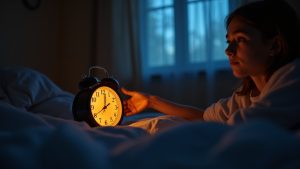
Here’s what this looks like in real life. A teenager lies in bed at ten o’clock, trying to fall asleep because they have school the next day. But their brain isn’t producing the sleepy signals yet. They’re just not tired. They might stare at the ceiling for an hour or more, genuinely unable to drift off.
Then morning comes, and the alarm goes off at six thirty. But their body is still deep in sleep mode because it only fell asleep a few hours earlier. They feel groggy and confused. They hit snooze multiple times. Getting out of bed feels almost painful.
This isn’t a choice or a discipline problem. It’s their biology working on a different schedule than the school day demands.
Light and evenings keep the brain in daytime mode longer
Your brain uses light as its main signal for “it’s daytime, stay alert.” When your eyes take in bright light, your brain interprets that as a reason to keep you awake and focused. This system worked perfectly when humans lived by the sun’s schedule. But modern evenings are nothing like the darkness our brains evolved to expect.
Think about a typical evening at home. Overhead lights are on. The TV is glowing. Maybe there’s a lamp by the couch, streetlights outside the window, and a phone screen lighting up your face. All of this tells your brain the same thing: it’s still daytime. Stay awake.
For teenagers, this matters more than it does for younger kids or adults. Their brains are already running on a delayed schedule, naturally pushing bedtime later. When you add several hours of bright light on top of that delay, you’re basically extending the “daytime” signal well into the night. The result is that sleepiness gets pushed back even further.
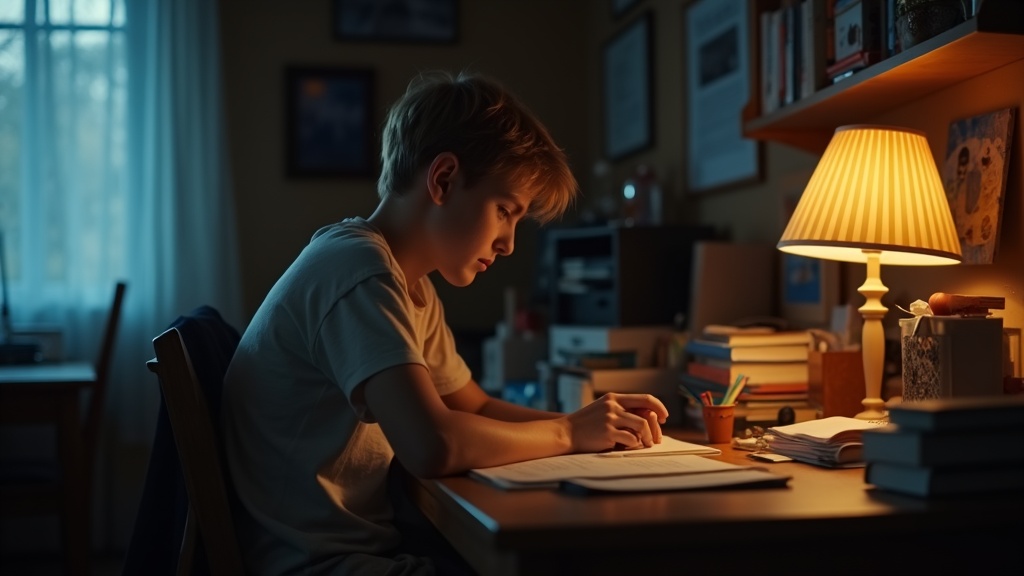
It’s easy to blame phones and screens, and they definitely play a role. But it’s not just about devices. A brightly lit kitchen, an exciting conversation, a loud or visually stimulating environment—all of these can keep the brain in alert mode. Even something as simple as doing homework under a bright desk lamp late at night sends a wake-up signal.
The takeaway isn’t that teens need to sit in the dark all evening. It’s that the modern environment works against their already-delayed biology. Brightness and stimulation in the hours before bed make it harder for their brains to recognize that sleep time is approaching.
Sleep pressure builds differently, and naps can reset it
Think of sleepiness as something that builds up the longer you stay awake. Scientists call this sleep pressure, but it’s just the growing weight of tiredness that makes you want to close your eyes. The longer you’ve been up, the stronger that pull toward sleep becomes.
For most teenagers, the day starts brutally early. They drag themselves out of bed at six or seven in the morning, fight through classes, and by three in the afternoon they’re exhausted. That sleep pressure has been building for hours.
So what happens? They come home and crash on the couch. Maybe it’s just twenty minutes, maybe it’s two hours. Either way, that after-school nap releases some of the pressure that’s been building all day. It feels great in the moment.
But here’s the catch. When they nap in the afternoon, they’re essentially hitting a reset button on their tiredness. By the time ten or eleven at night rolls around, they simply haven’t been awake long enough to feel sleepy again. Their body needed more hours to rebuild that pressure.
The same thing happens on weekends. A teenager sleeps until noon on Saturday, which means they’ve only been awake for about twelve hours by midnight. That’s not enough time for most people to feel genuinely tired. Then Sunday night arrives, school looms on Monday morning, and they’re lying in bed wide awake because their body isn’t ready.
None of this is laziness or poor choices. It’s just how sleep pressure works. When you sleep determines when you’ll be tired again later.
Early schedules, homework, and stress can overpower good intentions
Even when a teenager understands they need more sleep, the day itself fights back. School might start at seven or seven-thirty in the morning. That means waking up at six, or earlier if there’s a commute. For a teen whose body naturally wants to stay up until eleven or midnight, this creates an impossible math problem. They’d need to fall asleep by nine to get enough rest. But their biology isn’t cooperating.
The afternoon doesn’t help. After school ends, there’s soccer practice, a shift at work, babysitting a younger sibling, or rehearsal for the school play. Dinner happens. Maybe there’s some downtime, but not much. By the time a teenager actually sits down to start homework, it’s already eight or nine at night.
Now the real crunch begins. They have an essay due, math problems to finish, and a chapter to read. Even if they work efficiently, it’s going to take a couple of hours. Midnight arrives before they realize it. And they still need to shower, get ready for bed, and actually wind down enough to sleep.
Then there’s the cruel irony of stress itself. The more worried a teenager gets about not sleeping, the harder it becomes to actually fall asleep. Their mind starts racing. They’re thinking about tomorrow’s test, the homework they didn’t finish, how tired they’ll be in the morning. They check the clock and calculate how many hours are left. Each calculation makes the anxiety worse.
The cycle feeds itself. Lose sleep one night, struggle the next day, fall further behind, stay up later to catch up. Good intentions don’t stand a chance against this daily grind.
When late sleep might signal something else
Most teenagers struggle with sleep in predictable ways. They stay up too late, feel groggy in the morning, and complain about early school start times. That’s frustrating but normal.
Sometimes, though, what looks like typical teen sleep problems is actually something different. A few patterns are worth mentioning to a doctor, not because they’re alarming, but because they might respond well to treatment once someone takes a closer look.
If your teen consistently can’t fall asleep until three or four in the morning despite trying, and this creates serious problems during the day, that’s worth discussing. The same goes for extreme daytime sleepiness that seems beyond ordinary tiredness. Falling asleep repeatedly during class, nodding off while driving, or struggling to stay awake in conversations might signal an underlying issue.
Loud snoring, gasping sounds during sleep, or pauses in breathing don’t fit the usual teen sleep pattern either. These can point to breathing problems during sleep that are surprisingly common and quite treatable.
Major mood shifts that seem connected to sleep trouble also deserve attention. If your teen seems unusually irritable, anxious, or down in ways that go beyond normal teenage moodiness, and poor sleep is part of the picture, a conversation with a clinician might help.
The good news is that many sleep issues respond well to treatment once identified. Sleep disorders aren’t rare, and doctors who work with teenagers see them regularly. Bringing up concerns doesn’t mean something is seriously wrong. It just means getting clarity on whether what you’re seeing is garden-variety teen sleep chaos or something that could benefit from a different approach.