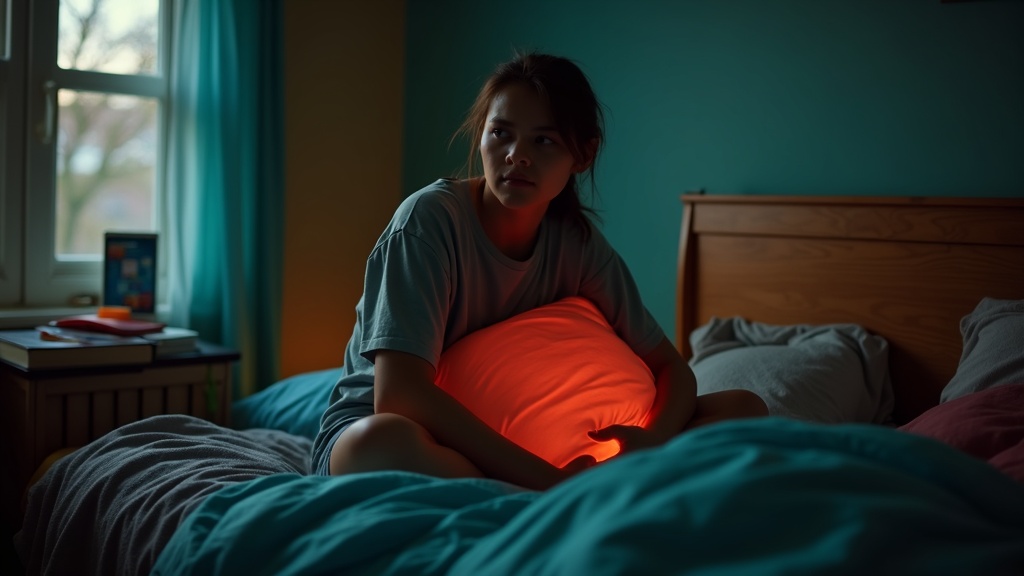
Your teenager sleeps until noon on weekends, struggles to wake up for school, and seems permanently attached to the couch. Normal teen behavior, right? Maybe. But it might also be a red flag that they’re not getting nearly enough sleep during the week.
The tricky part is that sleep-deprived teens don’t always look sleepy. They’re not necessarily nodding off at the dinner table or complaining about being tired. Instead, teen sleep deprivation shows up in ways that are easy to mistake for attitude problems, laziness, or just typical adolescent moodiness.
Most parents know that poor sleep can tank grades and focus. That’s the obvious stuff. But there are dozens of other signs that fly under the radar, things you notice around the house that don’t immediately scream “my kid needs more sleep.”
Maybe your teen has been snapping at their younger sibling more than usual. Or they’ve stopped caring about activities they used to love. Perhaps they’re eating at weird times or coming down with every cold that goes around. These everyday behaviors often get written off as hormones or stress, when the real culprit might be something simpler.
Teens actually need eight to ten hours of sleep each night, but their bodies are wired to stay up late and sleep in. When early school start times clash with this natural rhythm, chronic sleep loss becomes almost inevitable. Learning to spot the less obvious signs at home can help you figure out whether your teen is just being a teen, or if something more fixable is going on.
Mornings are a daily battle, not an occasional rough start
Every teenager has the occasional rough morning. Maybe they stayed up late finishing a project or were texting friends until midnight. That’s normal. What’s not normal is when getting your teen out of bed feels like an Olympic event every single day.
When a sleepy teenager is running on empty night after night, mornings start to follow a predictable pattern. The alarm goes off and gets snoozed. Then snoozed again. You call from the hallway, knock on the door, maybe even need to physically shake them awake. And even then, they’re not really awake.
Once they’re vertical, the signs keep coming. They might snap at you over something minor or shuffle around the house like they’re moving through fog. Some teens will sit on the edge of their bed, fully dressed, staring at nothing for five minutes. Others make it to the kitchen but can’t seem to organize themselves enough to grab breakfast or remember their backpack.
The key difference here is consistency. If your teen needs three wake-up calls once in a while, that’s life. If they need three wake-up calls every single weekday, that’s a red flag. The same goes for running late, forgetting things, or being irritable before noon. Once or twice a week might just be typical teenage chaos. But when it’s the default setting, when you can predict the struggle before it even starts, you’re likely looking at teen sleep deprivation rather than just a kid who’s not a morning person.
Pay attention to the baseline. That pattern tells you more than any single bad morning ever could.
Mood and patience change in small, telling ways
Your teen might not seem obviously exhausted. But you’ve noticed they snap at their younger sibling over nothing. Or they tear up during a conversation that wouldn’t normally upset them. Small frustrations that used to roll off their back now trigger big reactions.
These tiny emotional shifts are often the first sign that sleep debt is piling up. When teens don’t get enough rest, their emotional regulation suffers. Think of it like having a shorter fuse on everything. The math homework that’s slightly confusing becomes impossibly hard. A friend’s offhand comment feels like a personal attack.
You might also notice the opposite: a kind of flatness. Your usually animated teen seems withdrawn or checked out. They give one-word answers and don’t react much to things that would normally excite or annoy them. This emotional dulling is just as telling as the outbursts.
The key is watching for patterns, not isolated incidents. Every teen has bad days. But if you’re seeing this shorter patience or emotional flatness most days, especially on weeknights, sleep might be the missing piece. It’s not that your teen suddenly became difficult or moody by choice.
Sleep deprivation doesn’t create emotions out of nowhere, but it does amplify them. Normal teenage stress about friends, school, and identity feels much bigger when running on empty. What looks like attitude or overreaction might actually be a tired brain struggling to keep everything in perspective.
After school energy crashes or endless napping become the norm
Your teenager walks through the door at 3:30, drops their backpack, and disappears into their room. An hour later, you check on them and find them passed out on top of the covers, still in their shoes. This might happen once in a while after a particularly grueling day. But if it’s happening most afternoons, it’s worth paying attention to.
Sleep-deprived teens often hit a wall the moment they stop moving. The structure of the school day keeps them upright and alert enough to function. But once they’re home and the pressure is off, their body demands what it’s been missing. They might fall asleep during a ten-minute car ride home. They might doze off while scrolling their phone on the couch. Some can’t even make it through a quiet family dinner without their head nodding forward.
Here’s where things get tricky. Those long afternoon naps feel like they’re solving the problem. Your teen wakes up refreshed, tackles homework, and seems fine. But that three-hour nap at 4 p.m. often means they’re not tired at bedtime. They end up staying awake until midnight or later, which means they’re still not getting enough total sleep before the morning alarm goes off.
Then the cycle repeats. They drag themselves through another school day, come home exhausted, and crash again. Some teens even get a burst of energy late at night, that notorious second wind that kicks in around 10 or 11 p.m. It feels productive, but it’s often just their body’s confused response to an irregular sleep pattern.
If your teen can’t stay awake during normal waking hours without needing to shut down completely, their nighttime sleep probably isn’t doing its job.
More forgetting, more friction, more careless mistakes at home
You might notice your teen leaves cabinet doors hanging open after grabbing a snack. Or they start unloading the dishwasher and wander off with three plates still inside. They forget to take out the trash on the same day they’ve done it for months. These aren’t acts of rebellion. They’re often signs of a brain running on fumes.
Sleep deprivation messes with memory and focus in ways that don’t always show up on a report card. A sleepy teenager might look right at you during a conversation, nod along, and then have zero recollection of what you discussed an hour later. They’re not ignoring you on purpose. Their brain just isn’t consolidating information the way it should.
You might also see a pattern of lost items. Keys, wallets, phone chargers, hoodies. They put something down and genuinely can’t remember where. Or they need you to repeat instructions multiple times, not because they’re being difficult, but because the words aren’t sticking.
These behaviors are easy to dismiss as typical teen stuff. And sure, some forgetfulness comes with the territory. But if you’re noticing a real increase in these scattered moments, especially if it’s new or getting worse, poor sleep might be the culprit.
The tricky part is that teens themselves often don’t connect the dots. They just feel frustrated or defensive when you point out the pattern. They don’t realize their brain is working harder to do basic things because it’s not getting the rest it needs to function smoothly.
Late-night screen time isn’t just a habit, it can be a warning sign
Your teen says they’re going to bed at ten. But if you check their phone the next morning, you might notice something odd: messages sent at midnight, game achievements unlocked at one in the morning, or social media posts timestamped well past their supposed bedtime.
What starts as “just five more minutes” of scrolling can easily turn into an hour. Teens often don’t realize how much time has passed when they’re engaged with a screen. One more level, one more video, one more reply to a friend. Before they know it, they’ve burned through what should have been sleep time.
But it’s not just about staying up late. The content itself can work against them. An intense game, an emotional text conversation, or even just the constant stream of notifications can leave their minds buzzing. When their brain is that activated, falling asleep becomes genuinely difficult, even after they finally put the phone down.
Here’s what to watch for at home: light glowing under their bedroom door long after lights-out, phones charging right next to the bed (making it easy to grab), or defensive reactions when you mention bedtime. You might also notice they’re slow to hand over their phone in the evening, or they insist on keeping it nearby “just in case.”
Some teens even use their phones under the covers, which parents miss entirely. If your teen seems unusually protective of their nighttime routine, or if you spot that telltale glow when you walk past their room, their screen time might be quietly stealing hours of sleep they desperately need.
Small physical clues can point to poor sleep
Your teen’s body often speaks louder than their words when sleep is lacking. Some of the clearest signals show up in small, easy-to-miss ways that don’t immediately scream exhaustion.
Take headaches, for example. If your teenager mentions their head hurts more than usual, especially in the morning or afternoon, it might not just be stress or screen time. The same goes for those vague stomach aches that come and go without any obvious food trigger. When sleep gets short-changed night after night, the body reacts in these quiet, nagging ways.
You might also notice your teen becoming clumsier than usual. They bump into doorframes more often, drop their phone, or trip over nothing. Poor sleep affects coordination and reaction time, even if they seem wide awake.
Look at their face too. Those darker circles under the eyes are an obvious one, but also watch for a generally pale or washed-out complexion that sticks around day after day. And if they’re catching every cold that goes around school, that’s worth noting. Sleep is when the immune system does serious repair work.
Appetite changes tell a story as well. A teen who suddenly skips breakfast every day but raids the kitchen at eleven at night might be running on fumes. Their hunger cues get scrambled when their sleep schedule is off.
None of these signs proves anything on their own. Teenagers are complicated, and bodies change for lots of reasons. But when you see several of these patterns together, and they’re happening alongside obvious tiredness or mood shifts, sleep deprivation often turns out to be part of the picture.
When the signs add up, what a simple check-in can look like
If you’ve noticed a handful of these signs, it’s worth taking a week or so to simply pay attention. You’re not investigating or building a case. You’re just watching for patterns.
Notice when your teen actually goes to bed versus when their light goes off. Do they crash hard on Friday and Saturday nights? Are mornings a battle every single day, or just some days? Does their mood shift predictably around certain times? These patterns tell you more than any single bad day ever could.
Once you have a sense of what’s happening, try starting a low-key conversation. Skip the interrogation vibe. Instead, ask things like how long it usually takes them to fall asleep, or whether they feel awake during first period. You might ask if they ever feel exhausted but too wired to sleep at night. A lot of teens deal with that and don’t realize it’s connected to their sleep schedule.
The goal isn’t to fix everything in one talk. It’s just to find out whether sleep might actually be the thing dragging them down.
If your teen admits they’re tired all the time, even after seemingly getting enough sleep, or if the fatigue feels overwhelming and nothing you try makes a dent, it’s worth talking to their doctor. Sometimes teen sleep deprivation is about habits and screen time. But sometimes there’s something else going on, like a sleep disorder or an underlying health issue. A professional can help you figure out which it is.







