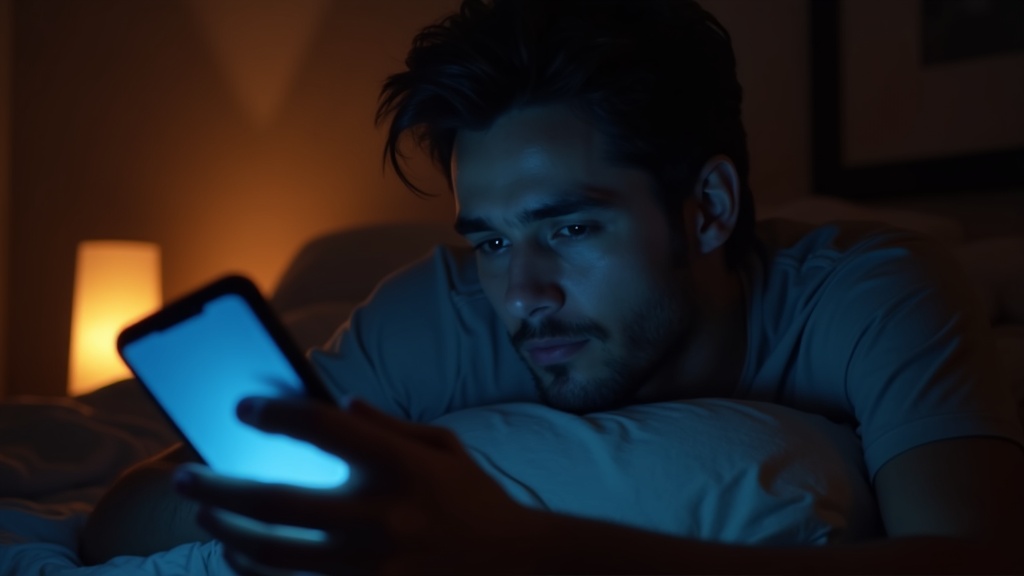
You know the feeling. You’re in bed, lights off, ready to sleep. But first, just a quick check of Instagram. Then maybe TikTok for a few minutes. Before you know it, half an hour has passed and your brain feels wired instead of tired.
If this sounds familiar, you’re not alone. Millions of people scroll through social media right before trying to fall asleep. And most of us wake up the next morning feeling like we didn’t rest properly, even if we were in bed for eight hours.
You’ve probably heard that blue light from screens is bad for sleep. That’s true, but it’s only part of the story. The real problem with late-night scrolling goes much deeper than the glow from your phone.
When you’re swiping through posts and videos before bed, your brain is doing the opposite of winding down. It’s processing faces, reading comments, reacting to news, and sometimes getting genuinely stressed or excited. Your mind thinks it’s supposed to be alert and engaged, not preparing for rest.
The result? You might finally put your phone down and close your eyes, but your thoughts keep racing. You toss and turn. You wake up multiple times during the night. And when morning comes, you feel exhausted despite spending plenty of time in bed.
Understanding how social media actually disrupts your sleep can help you make better choices about your bedtime routine. It’s not about giving up your phone completely. It’s about knowing what’s really happening when you scroll at night.
It quietly pushes your bedtime later than you think
You tell yourself you’ll just check Instagram for five minutes before bed. Maybe scroll through a few posts, see what friends are up to, then put the phone down and sleep. But social media feeds are designed without natural stopping points. There’s always one more video, one more thread, one more story to watch.
Before you notice, twenty minutes have passed. Then forty. Your brain doesn’t track time well when you’re looking at a screen at night, especially when each swipe brings something new. The content keeps flowing, and your sense of how long you’ve been scrolling gets fuzzy.
Notifications make it worse. Just when you’re about to put the phone down, a comment pops up or a friend posts something. You tap back in, telling yourself it’ll only take a second. But that second turns into another ten minutes of late night scrolling, and suddenly it’s past midnight.
This pattern doesn’t just steal a few minutes here and there. It genuinely shifts your bedtime later, sometimes by an hour or more without you realizing it. Even if you fall asleep quickly once you finally put the phone down, you’ve already lost that sleep time. You still need to wake up at the same hour for work or family responsibilities.
The result is straightforward but frustrating. You get less total sleep than your body needs. Mornings feel harder. You’re groggier, more irritable, reaching for extra coffee. And often, you’re not even sure why you’re so tired because it felt like you went to bed at a reasonable time.
The content can keep your brain switched on
It’s not just the glow of the screen that messes with your sleep. What you’re actually looking at matters just as much, maybe more.
When you scroll through social media before bed, you’re feeding your brain a constant stream of information. Some of it is funny or relaxing. But a lot of it is designed to grab your attention and stir up feelings. A heated comment thread. Breaking news that feels urgent. Someone’s dramatic story. A video that gets your heart racing.
Your brain doesn’t just forget about that stuff the moment you put your phone down. It keeps processing. You might find yourself lying in bed replaying an argument you read, or thinking about how to respond to a comment. Maybe you saw something upsetting in the news and now your mind is spinning through worst-case scenarios.
Even positive content can be too stimulating. If you watch exciting videos or get into an interesting conversation right before bed, your brain stays in active mode. You feel alert and engaged when you should be feeling calm and drowsy.
There’s also the urge to keep checking. Did anyone reply to your post? How many likes did that photo get? That little pull to look one more time can keep you from fully disconnecting, even after you’ve technically put the phone away.
The shift in mood matters too. You might be feeling fine, ready for bed, and then one post changes everything. Suddenly you’re annoyed, worried, or wide awake with thoughts you didn’t have five minutes ago. That emotional switch makes it much harder to drift off peacefully.
Bright screens can confuse your sense of nighttime
Your body has a built-in clock that tracks whether it’s day or night. One of the main clues it uses is light. When your eyes detect bright light, your brain gets a signal that says it’s still daytime. That makes it harder to start winding down for sleep.
Scrolling through social media at night puts a glowing screen just inches from your face. That close-up brightness can be surprisingly intense, especially if you’re in a dim bedroom. Your body might interpret this as a reason to stay alert, even if it’s actually ten at night and you’re exhausted.
The problem gets worse when you’re switching between apps or watching video clips. Each swipe and transition keeps your eyes adjusting to new light levels and colors. That constant stimulation doesn’t give your brain much chance to settle down. It’s a bit like flipping the lights on and off repeatedly when you’re trying to relax.
This doesn’t mean screens are the only reason people struggle to fall asleep. Stress, noise, room temperature, and what you ate for dinner all play a role too. But for many people, late night scrolling adds one more obstacle between them and drowsiness.
The effect varies from person to person. Some people can watch videos in bed and fall asleep easily. Others find that even a few minutes of screen time at night leaves them wide awake an hour later. It depends on how sensitive your system is to light and stimulation before bed.
Notifications can break your sleep even after you put the phone down
You finally put your phone on the nightstand and close your eyes. Then your screen lights up. A buzz. A ping. Someone just posted something, or a group chat is heating up, or an app wants you to know about an update you don’t care about.
Even if you don’t fully wake up, your brain notices. That little flash of light or sound is enough to pull you toward consciousness. You might not remember it in the morning, but these tiny interruptions keep your sleep lighter than it should be.
And here’s where it gets tricky. Sometimes you do wake up enough to wonder what the notification was. You tell yourself you’ll just glance at the screen. Just a quick check. But once you see that someone replied to your comment or a new video popped up in your feed, it’s hard to resist opening the app.
What starts as a quick peek turns into five minutes of scrolling. Maybe ten. By the time you put the phone down again, you’re more awake than before. Your mind is reacting to whatever you just saw, whether it’s something funny, annoying, or just mildly interesting.
Even brief wake-ups like this chip away at the quality of your rest. You might get your seven or eight hours technically, but it’s not the same as uninterrupted sleep. The next day, you feel groggier than you should. You might not connect it to those middle-of-the-night phone checks, but they add up more than most people realize.
Using social apps in bed trains your brain to stay alert there
Your brain is always learning patterns, even when you’re not trying to teach it anything. When you scroll through social media in bed night after night, your brain starts to connect that space with being awake and engaged. The bed stops being just a place where you sleep. It becomes a place where things happen.
Think about it this way. Every time you lie down and immediately reach for your phone, you’re practicing a routine. You’re watching videos, reading comments, maybe replying to messages. Your mind is active. Your attention is jumping around. You’re reacting to things.
Over time, your brain expects this. Lying down doesn’t automatically signal rest anymore. Instead, it can trigger a kind of readiness. Your mind anticipates that something interesting or stimulating is about to happen, because that’s what usually does happen when you’re in that spot.
This is why putting the phone away can sometimes feel uncomfortable or incomplete. You might lie there feeling restless, like something’s missing. Your brain is waiting for the activity it’s gotten used to. The bed has become a place to be entertained, not a place to wind down.
The same thing can happen with any repeated activity. If you regularly watch short videos or get into conversations right before trying to sleep, your mind learns to stay switched on in that environment. It’s not about willpower or discipline. It’s just how habits work. The more you do something in a particular place, the more your brain connects that place with that activity.
Late-night scrolling can change your mood right before sleep
You might think you’re just checking a few updates before bed, but what you see can completely shift how you feel. A friend’s vacation photos might leave you feeling stuck in your routine. A heated comment thread about politics or parenting can make your chest tight with frustration. Even a seemingly harmless post about someone’s promotion or new house can trigger that nagging sense that you’re falling behind.
These emotional reactions don’t just disappear when you put your phone down. Your mind keeps processing what you saw. You might lie there replaying an argument you read, or comparing your messy living room to someone’s perfectly styled home. That promotional post might have you questioning your career choices at midnight.
This kind of mental activity makes falling asleep much harder. Your brain needs to wind down before sleep, but scrolling often winds it up instead. When you’re annoyed, anxious, or feeling inadequate, your body stays more alert. Your heart rate might stay elevated. Your thoughts keep spinning.
The mood effects can also interrupt your sleep later in the night. If you fell asleep feeling unsettled or worried, you’re more likely to wake up during the night. Those feelings can bubble back up at 3 a.m., making it harder to drift back off.
The problem isn’t that social media is always upsetting. It’s that you can’t predict what you’ll see. One scroll session might be fine. The next might leave you stewing over something completely unexpected. And bedtime is the worst possible moment to encounter content that stirs you up emotionally.
Social media is designed to be hard to put down at night
There’s a reason you tell yourself you’ll check Instagram for five minutes and look up forty minutes later. Social media apps are built to keep you engaged as long as possible. That’s not an accident or a side effect. It’s the business model.
The most effective feature is the endless feed. You never hit a natural stopping point because there’s always one more post, one more video, one more story. The content just keeps coming. Autoplay does the same thing with videos. Before you’ve decided whether to keep watching, the next clip has already started.
Then there are personalized recommendations. The app learns what keeps your attention and serves you more of it. It gets better at holding your interest the more you use it. Features like streaks and daily goals add a small sense of obligation. You don’t want to break the chain, so you open the app even when you’re exhausted.
Social feedback makes it even harder to disconnect. When someone likes your post or replies to your comment, you get a little notification. Each one is a tiny reason to check back in. And when you’re scrolling late at night, you’re more likely to respond to that pull.
This matters more at bedtime because you’re already tired. Your self-control is lower at the end of the day. It takes more effort to stop doing something that feels easy and mildly rewarding. So even though you know you should put the phone down, the app makes it just a little bit harder to follow through. You’re not weak for struggling with this. You’re up against design choices specifically intended to extend your screen time at night.







