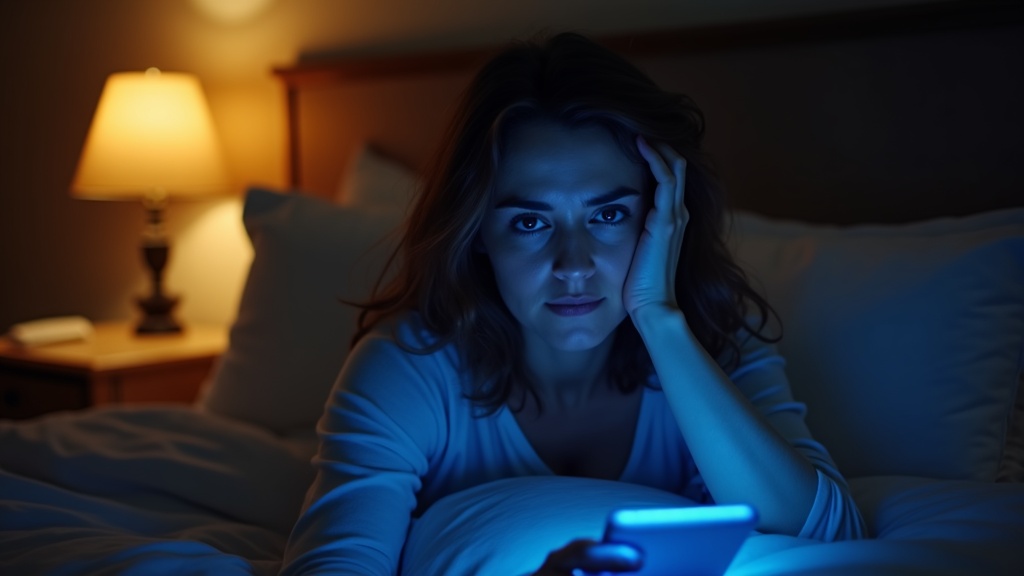
You’re exhausted. Your eyes feel heavy. You’ve been yawning for the past hour. So you finally drag yourself to bed, close your eyes, and wait for sleep to arrive.
But it doesn’t come. Your mind feels oddly alert. You toss and turn. You check the time and groan because now you’re stressed about how little sleep you’ll get. This scene plays out in bedrooms everywhere, night after night.
Here’s what makes it stranger: many of us spend the hour before bed doing things that should help us unwind. We scroll through social media. We watch one more episode. We answer a few emails or play a game on our phones. These feel like relaxing activities, and in some ways they are. But they might also be the reason sleep feels so far away.
The culprit isn’t the content on your screen or even how long you’ve been looking at it. It’s something most people have heard about but don’t fully connect to their own sleep troubles. It’s the light itself, specifically the blue wavelengths that screens emit. This light has a direct effect on your body’s internal clock, and when it hits your eyes at the wrong time, it can push your sleep schedule later and later without you realizing it.
Small habits add up. That quick phone check in bed. The laptop glowing on your lap. The tablet propped on your nightstand. Each one sends signals to your brain that confuse your natural sleep rhythm.
What people mean by blue light in everyday life
Blue light isn’t some artificial substance or chemical. It’s just a type of light that’s all around you. When we say blue light, we’re talking about a particularly bright, energetic part of the light spectrum that your eyes can see.
You experience blue light most intensely during the day, when sunlight floods everything with it. That’s actually one reason daylight feels so alert and awake. The sun is packed with blue light, and your eyes and brain have evolved to respond to it as a signal that it’s daytime.
But blue light doesn’t only come from the sky. Modern LED bulbs put out a lot of it too, especially the ones marketed as cool white or daylight bulbs. These tend to have that crisp, almost bluish glow compared to the warmer, yellowish light of old incandescent bulbs.
And then there are screens. Your phone, tablet, laptop, and television all use LEDs to create their displays, which means they’re also emitting blue light whenever they’re on. That’s the connection people usually think of first, but it’s important to remember that blue light isn’t exclusive to devices.
The key thing to understand is that blue light is just light with a certain quality that your eyes are particularly sensitive to. It’s not about one device or one bulb. It’s about the type of light itself, and how your body reacts when it hits your eyes, especially at certain times of day.
Why blue light at night can delay sleepiness
Your brain has a built-in clock that tracks when it’s time to be awake and when it’s time to sleep. One of the main things this clock relies on is light. Bright light, especially the kind that leans blue, signals to your brain that it’s daytime. That’s helpful in the morning. But at night, it becomes a problem.
Blue light is the type of light that comes from the sun during the day. It’s also the kind that screens emit in large amounts. When your eyes take in blue light in the evening, your brain interprets it as a sign that the day isn’t over yet. So it delays the natural wind-down process that should be happening.
Normally, as evening approaches and light fades, your body starts preparing for sleep. You begin to feel drowsy. Your internal clock shifts into nighttime mode. But blue light disrupts that shift. It essentially tells your body to stay alert a bit longer.
This doesn’t just keep you awake in the moment. It can actually push your body clock later, meaning you won’t start feeling sleepy until much later than you normally would. That’s why scrolling through your phone at 10 p.m. can leave you wide awake at midnight, even though you wanted to be asleep by eleven.
The effect isn’t dramatic enough to keep you up all night. But it’s enough to make falling asleep harder and to shave time off the rest you actually get. And when it happens night after night, those small delays add up.
How small screen habits quietly push bedtime later
Most people don’t think twice about grabbing their phone in bed. It’s just a quick scroll through messages or a five-minute video before turning off the light. But those few minutes often stretch into twenty or thirty without us noticing. And the closer the screen is to your face, the more blue light reaches your eyes.
When you hold a phone six inches from your face in a dark room, you’re getting a concentrated dose of bright light right when your brain is trying to wind down. The same show watched on a TV across the room has less impact than watching it on a tablet in your lap. Distance matters because light intensity drops off quickly the farther you are from the source.
Timing matters too. Checking your phone at nine in the evening is different from checking it at eleven thirty after you’ve already turned the lights off. That late exposure hits right when your body is preparing to release melatonin, the hormone that makes you feel sleepy. A bright screen at that moment can interrupt the signal.
The effect gets stronger in dark rooms. When your bedroom light is off and the screen becomes the main source of brightness, your eyes adjust and the contrast becomes more intense. Your brain interprets that bright glow as a signal that it’s still daytime. Even if you’re lying down with your eyes half-closed, the light is doing its work.
These small habits add up. A quick message check becomes a scrolling session. One video leads to another. Before you realize it, you’ve given yourself a solid window of bright light exposure right before trying to sleep.
Unexpected blue light sources beyond phones and laptops
Most of us know that scrolling through our phones in bed isn’t great for sleep. But blue light doesn’t just come from the obvious culprits. Your entire evening environment might be quietly signaling to your brain that it’s still daytime.
Think about your bedroom in the hour or two before you want to fall asleep. That bright overhead LED fixture? It’s often tuned to a cool white color that mimics daylight and floods the room with blue wavelengths. The same goes for many bedside lamps if they use those energy-efficient bulbs with a harsh, white glow.
Your bathroom can be a hidden problem too. Those vanity lights above the mirror are usually bright and cool-toned, perfect for putting on makeup or shaving, but also perfect for telling your body to wake up when you brush your teeth before bed.
Even your TV matters more than you might think, especially if you’re watching in a dark room. The contrast between a bright screen and total darkness makes the blue light exposure more intense. The same principle applies to tablets and e-readers with backlit screens, even if you’ve convinced yourself that reading before bed is relaxing.
Smart home lighting can be tricky too. If your bulbs are set to bright, cool settings in the evening, they’re working against you. The problem isn’t any single device or light source. It’s the cumulative effect of your whole light environment as bedtime approaches. All those seemingly minor sources add up, and your brain is paying attention to all of it.
Why some people notice blue light effects more than others
If your partner scrolls through their phone in bed and falls asleep instantly while you lie awake for an hour after checking one text, you’re not imagining the difference. Blue light affects people in different ways depending on a bunch of practical factors.
The biggest one is how bright your screen is compared to the rest of your room. If you’re using your phone in a completely dark bedroom, that screen becomes the main source of light your eyes are taking in. Your brain pays much more attention to it. The same phone in a room with a lamp on has less power to shift your internal clock.
What you’re doing on the screen matters too, though not because of the light itself. If you’re doom-scrolling through stressful news or playing an intense game, the emotional engagement and mental stimulation stack on top of the light effects. It becomes nearly impossible to tell whether it’s the blue wavelengths, the caffeine you had earlier, the work stress you’re processing, or the thriller you’re watching that’s keeping you wired.
Timing plays a role as well. If you naturally tend to stay up late anyway, a little extra light exposure might not shift things much further. But if you’re already overtired or trying to fall asleep earlier than usual because you have an early flight, that same amount of screen time can feel like it’s sabotaging you.
Some people also just have circadian rhythms that are more or less sensitive to light in general. There’s real variation from person to person, the same way some people can drink coffee at eight in the evening and sleep fine while others can’t touch it after noon.





