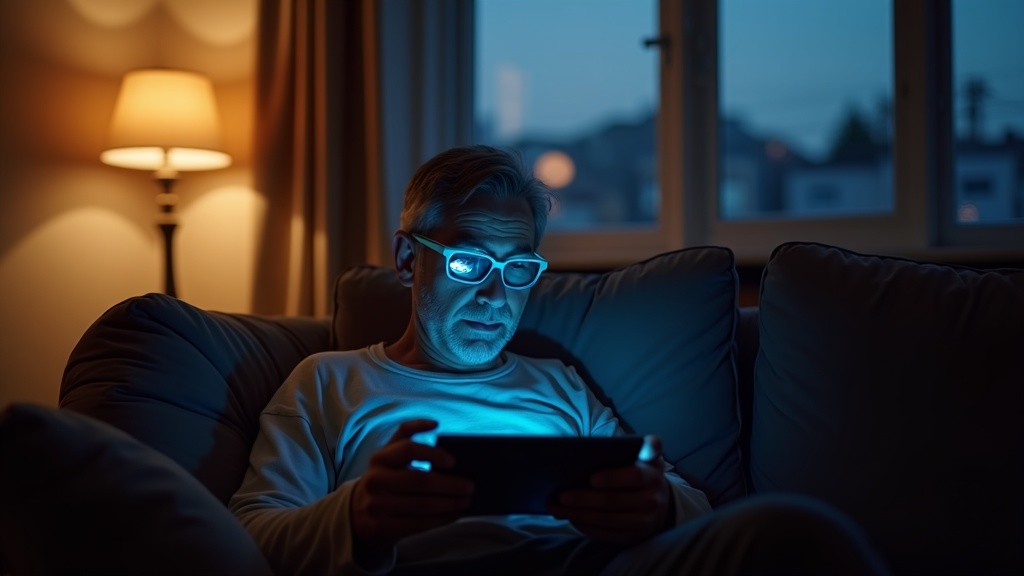
You’ve probably seen them advertised everywhere. Those amber-tinted glasses that promise to save your sleep from the glow of your phone, laptop, or TV. Blue light glasses have become hugely popular, with influencers swearing by them and brands claiming they’ll transform your nights.
The basic idea sounds reasonable enough. Blue light from screens might mess with your body’s sleep signals, so blocking that light should help you fall asleep easier. Simple, right?
Not quite. The truth about blue light glasses is more complicated than the marketing suggests. Some people say they notice a real difference. Others feel nothing at all. Scientists have studied the question, but their answers aren’t as clear-cut as you might hope.
Here’s what makes this confusing: blue light does affect your sleep, but probably not in the dramatic way you’ve been told. Your evening screen habits matter, but glasses alone won’t fix everything. And the difference between scrolling at midnight versus nine in the evening turns out to be pretty important.
So do blue light glasses actually work? The short answer is: sort of, sometimes, for some people. They’re not magic, but they’re not useless either. Whether they’ll help you depends on how you use screens, when you use them, and what else you’re doing before bed.
Let’s break down what’s really happening with blue light and your sleep, so you can figure out if these glasses make sense for you.
What blue light glasses are actually trying to solve
Your body has an internal clock that tries to figure out when it’s time to sleep. For most of human history, this was pretty straightforward. When the sun went down and things got dark, your brain would start releasing melatonin, a hormone that makes you feel drowsy and ready for bed.
But now we have phones, tablets, laptops, and TVs. All of these screens produce light that can trick your brain into thinking it’s still daytime. When your brain senses bright light in the evening, it may hold back on releasing melatonin. That can leave you feeling more alert when you’d rather be winding down.
This is where blue light enters the conversation. Light comes in different colors, and blue light is especially good at telling your brain to stay awake. It’s the kind of light that’s abundant in morning and midday sunshine. Your phone and computer screens emit quite a bit of it too.
Blue light glasses are designed to filter out some of that blue light before it reaches your eyes. The idea is simple: block the wake-up signal, and maybe your brain will get the memo that it’s actually nighttime.
It’s worth noting that not everyone reacts to screen light the same way. Some people scroll through their phone before bed and fall asleep just fine. Others feel wired after even a few minutes of screen time. The glasses are meant to help people in that second group, though whether they actually do is a different question.
When blue light glasses for sleep are most likely to help
Blue light glasses aren’t a magic fix, but they’re more likely to make a difference in certain situations. The key factor is how much bright light you’re getting right before you try to sleep.
Think about working late on a laptop with the brightness turned up, or scrolling through your phone in a dark bedroom. These are the moments when blue light glasses might actually help. The screen is close to your face, it’s putting out a lot of light, and you’re doing this right before you want to fall asleep. That’s when blocking some of that blue light could make it easier for your body to start winding down.
Gaming sessions that stretch late into the night are another good example. If you’re staring at a bright monitor for hours, then immediately trying to sleep, your brain might still be in high alert mode. Glasses could take the edge off that stimulation.
The glasses also seem to help more if you’re already sensitive to light or have trouble switching off at night. Some people notice screen time keeps them wired, while others can scroll for an hour and fall asleep instantly. If you’re in the first group, blue light glasses might be worth trying.
On the other hand, if you finish your screen time a few hours before bed, or you’re using devices with dimmed screens across the room, the impact is probably minimal. The glasses work best when you’re getting a lot of bright, close-up screen exposure in the hour or two before sleep. That’s when they have the best shot at making a noticeable difference.
When the glasses may not be the main issue
Blue light glasses might sound like a silver bullet for sleep problems, but they only address one piece of a much bigger puzzle. Your phone or laptop isn’t just a source of blue light. It’s also a portal to news, social media, work emails, and everything else designed to keep your attention.
Spending an hour scrolling through upsetting headlines or getting into arguments online will amp up your stress levels, and stress is terrible for sleep. Your brain doesn’t care if you’re wearing special glasses when it’s busy processing anxiety or anger. The content matters just as much as the light.
There are also other factors that can quietly sabotage your sleep. Having coffee after dinner, drinking alcohol late at night, or keeping an irregular sleep schedule all make it harder to fall asleep and stay asleep. So does a bedroom that’s too bright, too noisy, or too warm.
Here’s another trap worth mentioning: some people feel so protected by their blue light glasses that they give themselves permission to stay up later. They think the glasses have solved the problem, so they keep watching just one more episode. But staying up until midnight is still staying up until midnight, regardless of what you’re wearing on your face.
Blue light blocking can be a helpful tool, but it’s not magic. If your sleep is suffering, it’s worth looking at the whole picture before deciding these glasses are the answer or writing them off completely.
How glasses compare with night mode, dimming, and lighting changes
Blue light glasses aren’t the only tool in your nighttime toolkit. Your phone and computer probably already have built-in options like night mode or warm color filters that shift the screen toward orange and yellow tones. These do something similar to what glasses attempt—they reduce the amount of blue light hitting your eyes.
The main difference is where the filtering happens. Glasses block blue light before it reaches your eyes. Screen settings change what your device displays in the first place. Both can help dial down that alertness signal your brain gets from bright, cool-toned light.
Then there’s the simpler stuff that doesn’t require any special gear. Dimming your screen brightness makes a real difference, especially in a dark room. So does changing your room lighting—swapping bright white bulbs for warmer ones, or just using fewer lights overall in the evening.
Here’s what matters most: combining these approaches works better than relying on just one. You could wear blue light glasses while staring at a blazingly bright screen in a room flooded with overhead lights, but you’re not doing yourself many favors. The goal is to create an overall environment that tells your body it’s time to wind down.
Think of it this way—blue light blocking is one ingredient, not the whole recipe. Dimmer screens, warmer lighting, and cutting back on screen time in the hour before bed all add up. No single tool is magic, but together they can actually shift how alert or relaxed you feel when your head hits the pillow.





