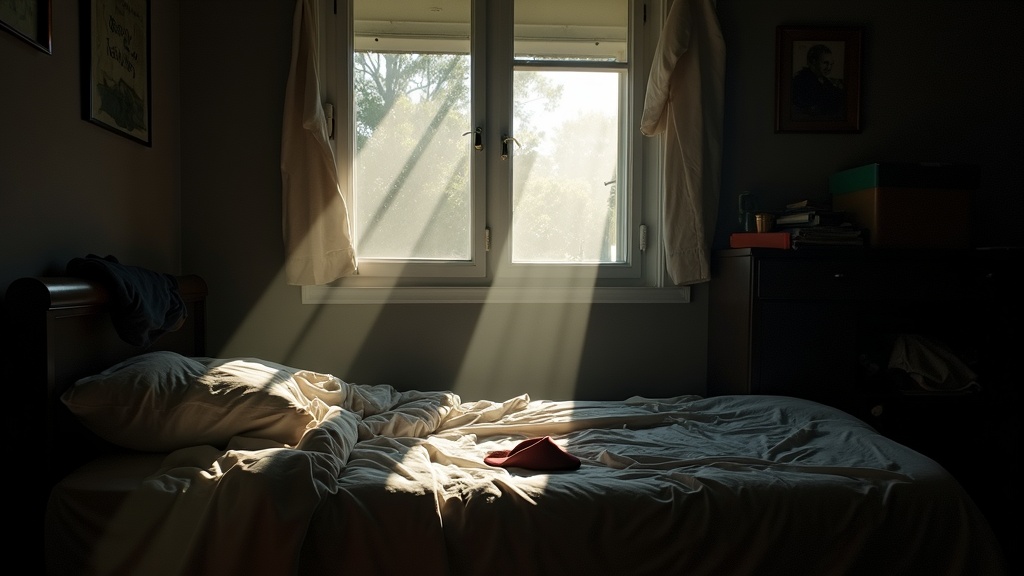
You might not realize how much light sneaks into your bedroom at night. Streetlamps glowing through the window. The neighbor’s porch light. That sliver of hallway brightness under the door. Even your alarm clock casting a faint blue glow across the nightstand.
Most of us get so used to these little light sources that we stop noticing them. But your brain notices. Even when your eyes are closed, light signals your body that it might still be daytime. That makes it harder to fall asleep deeply and stay asleep through the night.
This becomes especially obvious in certain situations. If you live in a city where streetlights never go dark, your bedroom might never get truly black. If you work night shifts and need to sleep during the day, sunlight becomes your biggest enemy. If you’re sensitive to light or dealing with sleep trouble, even a small amount of brightness can keep you tossing and turning.
Blackout curtains do exactly what their name suggests. They block light from entering your room, creating the kind of darkness your body naturally expects when it’s time to rest. It sounds simple, and it is. But that simplicity can make a surprisingly big difference in how well you actually sleep.
The question is whether that difference matters enough for your specific situation. Some people notice the change immediately. Others find it helps in ways they didn’t expect. Let’s look at the real scenarios where blocking out light transforms a bedroom from just okay to genuinely restful.
The light in your room might be louder than you think
You might think you sleep fine with a little light creeping in. Your eyes are closed, after all. But your body doesn’t need your eyes wide open to register that glow from the hallway, the green dot on your phone charger, or the streetlamp bleeding through the edges of your curtains.
Even small amounts of light send a quiet signal to your brain: it’s not completely night yet. That signal doesn’t wake you up dramatically. It just keeps you from settling into the deepest, most restorative stages of sleep. You might fall asleep eventually, but your sleep stays lighter than it should be.
Think about the last time you tossed and turned for twenty minutes, or woke up at five in the morning for no clear reason. Sometimes the culprit isn’t stress or caffeine. It’s the faint blue glow from the router across the room, or the sliver of light under the door, or the headlights that sweep across your wall every time a car drives by.
These sources add up. A nightlight in the hallway. The standby light on your TV. The alarm clock with numbers bright enough to read from across the room. Individually, none of them seem like much. Together, they create what you might call ambient light—a low, steady presence that your brain interprets as “not fully dark.”
The tricky part is that you don’t always notice it consciously. You just wake up feeling less rested than you hoped, or find yourself hitting snooze more than usual. Your sleep environment is doing its job quietly in the background, whether you realize it or not.
Where blackout curtains make the biggest difference in real life
If you live in a city apartment, you know the problem. Streetlights pour through your window all night. Neon signs from the restaurant across the street flicker against your ceiling. Car headlights sweep across your bedroom every time someone turns the corner. Your brain never gets the darkness signal it needs to stay asleep. Blackout curtains block all of that at the source, and people often notice they wake up fewer times during the night.
The same goes for bedrooms that face east. When the sun comes up at five in the morning during summer, your room lights up whether you’re ready or not. Your body reads that bright light as a wake-up call, even if your alarm isn’t set for two more hours. Blackout curtains keep the room dark until you actually want to get up, so early sunrises stop cutting your sleep short.
Shift workers face a tougher challenge. Sleeping during the day means fighting against every signal your body uses to stay awake. Sunlight streaming through regular curtains makes it nearly impossible to fall asleep at ten in the morning. Blackout curtains create an artificial night, and many shift workers say it’s the one change that finally let them get decent daytime sleep.
Parents of young kids notice the difference too. Babies and toddlers don’t understand that seven o’clock bedtime in June when it’s still bright outside. A dark room helps them settle down faster and stay asleep longer during naps. It’s not magic, but it removes one big obstacle that keeps little ones wired when they should be winding down.
How darker mornings and brighter mornings can shift your timing
Your body runs on an internal clock that tells you when to feel alert and when to feel sleepy. That clock is called your circadian rhythm, and it relies heavily on light to know what time it is.
When morning light sneaks through thin curtains and hits your eyes, even while they’re closed, your brain reads that as a signal. It thinks morning has arrived. Over time, this can pull your wake-up time earlier and earlier, whether you want that or not.
This is fine if you’re trying to become a morning person. But if you stayed up late the night before, or if you work nights and need to sleep during the day, that early light becomes a problem. Your body wants to wake up because the sun is telling it to, even though you desperately need more rest.
Blackout curtains give you control over that signal. By keeping your bedroom darker in the early morning hours, you’re essentially telling your internal clock to hold off a bit longer. This can help you sleep closer to the schedule you actually need, rather than the one the sunrise is pushing you toward.
The goal isn’t to live in total darkness around the clock. Light is helpful and necessary during your waking hours. The trick is managing when it reaches you. Blocking it during your intended sleep time helps keep your internal rhythm aligned with your real life, especially when those two things don’t naturally match up.
Making blackout curtains work with your bedroom setup
You hang up blackout curtains, step back to admire your work, and then wake up the next morning with a stripe of sunlight across your face. This happens more often than you’d think, and it’s usually not the curtain’s fault.
The biggest problem is gaps. Light sneaks in around the edges where the curtain doesn’t quite meet the wall. It streams in at the top if your rod sits too close to the window frame. It creeps in at the bottom if your curtains hover an inch or two above the floor.
The fix is mostly about sizing and placement. Your curtains should be wider than the window itself, extending several inches past each side when closed. This gives you overlap in the middle and coverage at the edges. Length matters just as much. Curtains that brush the floor or even puddle slightly will block far more light than ones that stop short.
Mounting the rod higher and wider than the window frame helps too. This lets the fabric drape in front of the wall instead of inside the window recess, covering more potential light leaks. It’s a small adjustment that makes a noticeable difference.
Some blackout curtains also feel thin or let pinpricks of light through the weave. If the fabric seems flimsy or the backing looks pale, it probably won’t block much. Darker backings and thicker materials do better.
One last thing to watch for: blackout curtains can trap heat in summer or block warmth in winter. If that’s an issue, you can layer them with lighter sheers and open the blackouts during the day. That way you’re not choosing between comfort and darkness.
What changes you might notice after switching
The first thing most people notice is how differently the room feels in the morning. Instead of waking up when the sun hits your face at six, you might sleep until your alarm actually goes off. Some people find they fall asleep a bit faster too, especially if streetlights or passing headlights used to creep through regular curtains.
Weekend sleep often changes the most. Without early daylight nudging you awake, you might naturally sleep an extra hour or two. Your body just keeps going until it’s done resting, rather than responding to that gradual brightening that usually pulls you out of sleep.
If you work nights or rotating shifts, the difference can be more obvious. Trying to sleep during the day becomes much easier when your brain isn’t getting conflicting signals from bright afternoon light. The room feels more like nighttime, which helps your body cooperate.
Some people report fewer middle-of-the-night wake-ups, particularly in summer when dawn arrives early. Even if you don’t fully wake up, your sleep might feel less disrupted overall. Others just say the room feels calmer and more restful, even if they can’t point to a specific change in their sleep pattern.
That said, plenty of people notice very little difference. If your main sleep issue is noise from the street, a partner who snores, or racing thoughts at bedtime, blocking light won’t solve those problems. Temperature matters too. A pitch-black room that’s too warm will still keep you tossing around.
Give it a week or so before deciding whether it’s helping. The first night or two might feel different just because the change is new. After that, you’ll have a better sense of what’s actually shifting.







