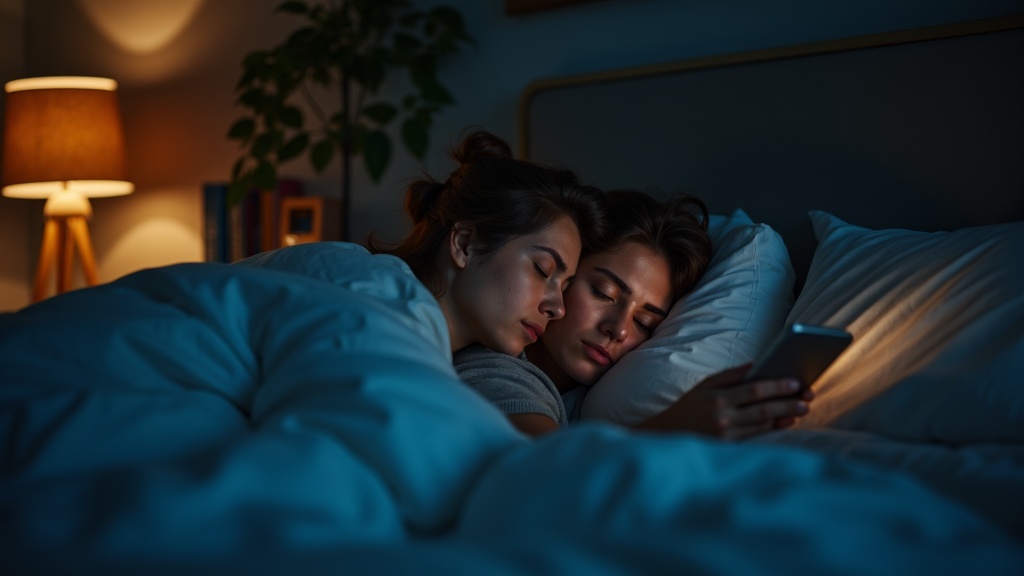
You’ve probably noticed that falling asleep in a dark hotel room feels different than sleeping in your own bedroom. Or maybe you’ve wondered why some nights you drift off easily while others leave you staring at the ceiling. The answer might be simpler than you think: light.
Even small amounts of light can affect how quickly you fall asleep, how deeply you rest, and how refreshed you feel in the morning. Your body relies on darkness as a signal that it’s time to wind down and produce the hormones that make you sleepy. When light sneaks into your bedroom, it can confuse that natural process.
Here’s what catches most people off guard. It’s not just the obvious culprits like streetlights or a bright alarm clock. The real problem often comes from tiny sources you’ve stopped noticing. That little charging light on your phone. The glow from your cable box. The sliver of hallway light under your door. These seem harmless because they’re small, but your eyes are surprisingly sensitive in the dark.
You might think you’ve gotten used to these lights, that they don’t bother you anymore. But your brain is still registering them, even when your eyes are closed. And that can quietly chip away at your sleep quality night after night, leaving you tired without understanding why.
The good news is that once you know what to look for, fixing the problem is usually straightforward. Let’s explore how even the tiniest bedroom lights might be affecting your rest.
Why your brain treats bedroom light as a wake-up signal
Your brain uses light as its main clue for telling time. When light hits your eyes, even through closed eyelids, it sends a signal that says “daytime is still happening.” This made perfect sense for most of human history, when the sun was the only bright light around.
The problem is that your brain can’t tell the difference between sunlight and the glow from your alarm clock. Both register as “light,” and both can convince your body that it’s not quite time to power down for the night.
This is where melatonin comes in. Think of melatonin as your body’s “night mode” signal. When it gets dark, your brain starts releasing this hormone to make you feel drowsy and ready for sleep. But when light sneaks into your bedroom, it can slow down or block that melatonin release. You might still feel mentally tired, but your body hasn’t fully switched into sleep mode.
The tricky part is that both brightness and timing matter. A bright light right before bed has a bigger effect than a dim one. But even small amounts of light during the night can make your sleep lighter and easier to disturb. Your brain keeps one eye open, so to speak, because the light signals suggest it might need to wake up soon.
This is why you might toss and turn more in a room with streetlight creeping through the curtains, or wake up feeling less rested even though you were in bed for eight hours. Your brain never fully committed to deep sleep because it kept getting mixed signals about whether it was really nighttime.
The not-so-obvious places bedroom light sneaks in
You might think your bedroom is dark, but there’s often a surprising amount of light creeping in from places you’ve stopped noticing. Your eyes adjust to it, and over time, you forget it’s even there.
Streetlights are one of the biggest culprits. Even with curtains closed, that orange or white glow often filters through the fabric, especially around the edges. If your bed faces the window, you’re getting a steady wash of light across your face all night long.
Then there’s the light coming from under your bedroom door. If you leave a hallway light on or there’s a bathroom light nearby, that strip of brightness at the floor can be enough to keep your room from feeling truly dark. It might seem minor, but your brain picks up on it.
Maybe someone in another room is watching TV, and that flickering blue glow bounces down the hall and into your space. Or perhaps you’ve got a digital clock with a bright display, a phone charging with a little LED indicator, or even a smoke detector with a blinking status light.
The tricky part is that these sources don’t feel bright when you’re awake and moving around. But when you’re lying still in bed, trying to sleep, even dim and constant light can register with your eyes. If it’s hitting your face or the area near your pillow, it’s enough to signal to your brain that it’s not fully nighttime yet. That’s when your body starts holding back on melatonin, the hormone that helps you fall and stay asleep.
Do tiny LEDs and charging lights really matter?
The answer isn’t a simple yes or no. It depends on the light itself and where it sits in your room.
A dim green dot on your phone charger probably won’t wreck your sleep if it’s tucked behind a lamp or facing away from you. But that same tiny light becomes a problem when it’s bright, blinking, or staring straight at your pillow. Your brain notices movement and brightness even through closed eyelids, especially during lighter sleep stages.
The real troublemakers are LEDs that draw your attention. A bright blue power strip light near your bed can feel like a miniature spotlight. A router with a flashing orange alert can pull you out of sleep every time you shift positions. These aren’t necessarily flooding your room with light, but they’re creating focal points that your brain keeps checking on.
Reflections make things worse. A small LED bouncing off a TV screen, mirror, or glossy furniture can spread across your wall like a tiny projector. What started as a single pinpoint becomes a distracting glow that’s hard to ignore.
The bottom line is this: if you can see a light with your eyes closed, or if you find yourself glancing at it during the night, it’s worth covering or moving. But you don’t need to hunt down every invisible speck of light in your room. A charger LED hidden under your nightstand isn’t the reason you’re tired. Focus on the lights you actually notice first.
Night lights: helpful for safety, tricky for sleep
If you need to get up during the night, a night light can prevent a stumble or a trip over the dog. For some people, especially older adults or anyone with mobility concerns, that little glow offers real peace of mind. The problem is that even a small light can chip away at your sleep quality if it’s too bright or pointed in the wrong direction.
The key is finding a balance. You want enough light to navigate safely, but not so much that it keeps your brain alert or signals that it’s time to wake up. Think of it as lighting a path, not lighting a room.
Placement makes a huge difference. A night light positioned low to the floor, like in a hallway or tucked near the baseboards, gives you just enough visibility without flooding your bedroom with light. Avoid putting one on a nightstand or dresser where it shines directly at your pillow. Your eyes are surprisingly sensitive even when closed, and light aimed at your face can interfere with deeper sleep stages.
Color and brightness matter too. A dim, amber or reddish glow is far less disruptive than a bright white or blue light. Warmer tones don’t trigger the same wake-up signals in your brain that cooler, brighter lights do. If your current night light feels too intense, try swapping it for something softer and warmer.
You don’t have to choose between safety and good sleep. With a little attention to where you place your night light and what kind of glow it gives off, you can have both.
Screens before bed: it’s not just the light, it’s the kind of light and the habit
Your phone is probably the brightest thing in your bedroom at night, and it’s usually just inches from your face. That combination matters more than most people realize.
Screens emit light that skews toward the blue and cool end of the spectrum. This type of light is particularly effective at telling your brain it’s daytime. When that light is close and bright, the signal gets even stronger. It’s like holding a miniature sun up to your eyes right when your body is trying to wind down.
But the light itself is only part of the problem. Scrolling through social media, watching videos, or reading news keeps your mind engaged and alert. Your brain is processing information, reacting to content, sometimes getting worked up about what you’re seeing. That mental activity works against the gradual quieting down that sleep requires.
Night mode and similar features do help by shifting the screen’s color temperature toward warmer tones. They reduce some of the alerting effect of blue light. But if your screen is still bright and you’re still holding it close to your face, you’re still getting a substantial dose of light exposure at exactly the wrong time.
The issue isn’t really about being virtuous or disciplined. It’s just physics and biology. Bright light near your eyes in the evening delays melatonin release, which is your body’s signal that it’s time to sleep. The closer and brighter the source, the stronger that delay tends to be. Dimming your screen and holding it farther away helps, but the most effective approach is usually just putting it down earlier.
Room darkening that makes a real difference without overhauling your bedroom
The biggest wins usually come from tackling the brightest light sources first. That might sound obvious, but many people start by covering a dim alarm clock while ignoring the streetlight streaming through a gap in their curtains. Your eyes are surprisingly good at picking up even small amounts of light, but intense sources matter more than faint ones.
Curtains are a common weak point. Even blackout curtains let light sneak in around the edges and through the gap where the panels meet in the middle. A simple fix is adding a wrap-around curtain rod that extends past the window frame on both sides, or using clips to pull the curtain panels closer together. Some people stick a strip of velcro along the wall to seal the edges. It looks a bit makeshift, but it works.
Light leaking under or around your bedroom door can be surprisingly bright, especially if there’s a hallway light on. A rolled towel along the bottom blocks most of it. If light comes through the gap around the frame, weather stripping meant for drafts does the job without any tools.
For devices you can’t move, a small piece of electrical tape over an LED makes it disappear. If you need to see the device occasionally, try dimmer tape or a single layer of masking tape instead. The goal isn’t to live in a cave. It’s to reduce the light that hits your eyes when you’re lying in bed. That’s the zone that matters most, and small changes there tend to make the biggest difference in how your sleep environment actually feels.
How morning and middle-of-the-night light changes your sleep quality
You might think your bedroom is dark enough at night, but what about at five in the morning? That’s when things get tricky. Even a small amount of light creeping through your curtains as dawn approaches can nudge your body into thinking it’s time to wake up. Your brain is incredibly sensitive to light changes in those early hours, and it doesn’t need much of a signal to start shutting down sleep mode.
This is why people often wake up earlier in summer or when streetlights shine through a gap in the blinds. Your body reads that subtle brightness as a cue that morning has arrived, even if your alarm isn’t set for another hour.
The middle of the night brings its own problems. Say you wake up to use the bathroom and flip on the light. That sudden brightness hits your eyes like a wake-up call, and your brain responds accordingly. It’s not just about being uncomfortable. That burst of light can actually make it genuinely harder to drift back to sleep.
The same thing happens when you grab your phone to check the time. The screen’s bright glow might seem harmless for a few seconds, but it’s enough to tell your body that it’s time to be alert. What should have been a quick bathroom trip or a glance at the clock turns into twenty minutes of tossing and turning.
The frustrating part is that these light exposures feel so brief and innocent. But your eyes and brain don’t experience them that way. They register the brightness as important information, and that’s enough to shift your sleep quality for the rest of the night.
Why some people notice light more than others
If your partner sleeps soundly through streetlight glare while you toss and turn, you’re not imagining things. People really do have different levels of sensitivity to light during sleep.
Light sleepers tend to notice bedroom light more simply because they wake up more easily in general. Any small disruption, whether it’s light, sound, or temperature, can pull them out of sleep. For these people, even a charging cable’s tiny LED might be enough to cause problems.
Your daily schedule plays a role too. If you work night shifts or irregular hours, your body’s internal clock gets confused about when it should produce melatonin, the hormone that makes you drowsy. This can make you more sensitive to light at unusual times because your brain is already struggling to figure out when it’s supposed to be awake.
Where light actually hits matters more than most people realize. A lamp across the room might not bother you at all, but that same amount of light shining directly on your face can make falling asleep much harder. The angle of your bed, where windows are positioned, and even how you sleep (on your back versus facing the wall) all change how much light reaches your closed eyelids.
Worrying about sleep can create its own sensitivity. If you’ve struggled with insomnia before, you might become hyperaware of anything that could interfere with rest, including light sources you previously ignored.
The good news is you don’t need to understand exactly why you’re sensitive. Start by blocking the most obvious light sources and pay attention to whether you fall asleep faster or wake up less during the night. Small improvements count, even if you’re not achieving total darkness.





