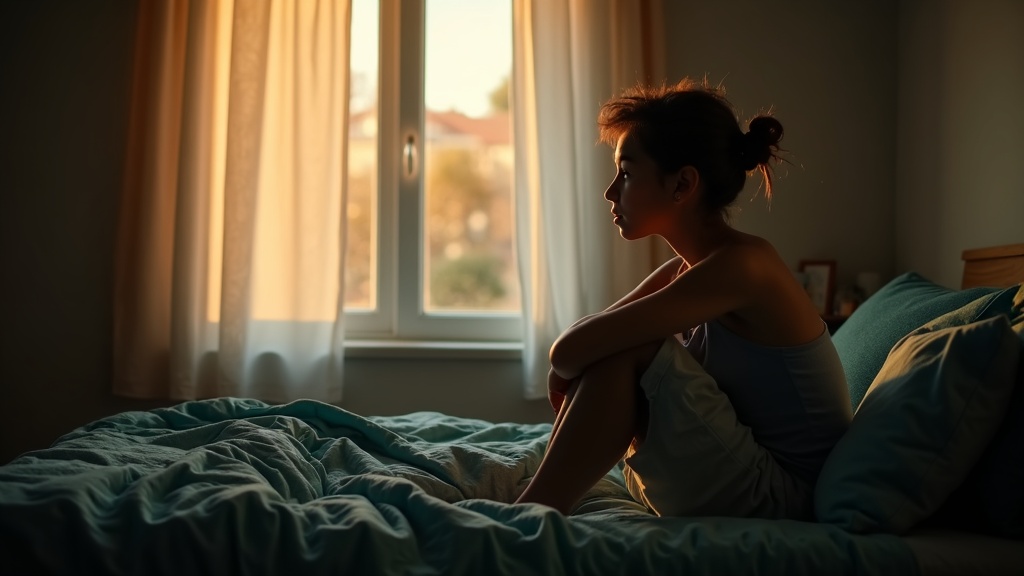
Your teenager stays up late, drags themselves out of bed each morning, and seems irritable most of the time. You’ve probably chalked it up to typical teen behavior. After all, don’t all teenagers act like this?
The truth is, what looks like moodiness, laziness, or attitude problems might actually be something else entirely. Teen sleep problems rarely announce themselves with obvious symptoms. Instead, they disguise themselves as the very behaviors we’ve come to expect from adolescents.
A teen who can’t focus in class might not be distracted or unmotivated. They might be genuinely exhausted. The kid who seems anxious or depressed could be dealing with months of poor sleep that’s quietly eroding their mental health. Even that sudden drop in grades or loss of interest in activities they used to love can trace back to sleep issues that nobody recognized.
The tricky part is that these sleep struggles build slowly. There’s rarely a dramatic moment when you realize something’s wrong. Instead, small changes accumulate over weeks and months until your teen is struggling in ways that affect their entire life.
Most parents and teens miss these warning signs because they seem so ordinary. But recognizing the subtle patterns early can prevent much bigger problems down the road. Understanding what real teen sleep problems actually look like is the first step toward helping your teenager get back on track.
Weekend catch-up sleep that quietly makes weekdays worse
The pattern looks innocent enough. Your teen drags through the school week on six hours of sleep, then crashes Saturday morning and sleeps until noon or later. They seem fine by Saturday night, maybe even energized. You figure they needed the rest.
But here’s what’s actually happening. Those long weekend sleep sessions feel like they’re fixing the problem, but they’re really just masking how serious the sleep debt has become. When your teen sleeps until noon on Saturday, their body clock shifts later. By Sunday night, they’re wide awake at their normal bedtime because their brain thinks it’s only midday.
So Sunday night turns into a battle. They lie in bed, frustrated and unable to fall asleep. You might notice them irritable or snapping at simple questions. When they finally do drift off, it’s well past midnight. Then Monday morning arrives with its early alarm, and the whole painful cycle starts again.
From the outside, it looks like your teen just can’t manage mornings. They stumble around Monday in a fog, barely functional until third period. By Friday they’re running on fumes. Parents often think this is just teenage laziness or poor time management.
But it’s actually a feedback loop. The weekend catch-up sleep feels necessary because the weekday deficit is real. Yet catching up this way guarantees they’ll struggle to fall asleep Sunday night, which guarantees Monday will be rough, which makes them even more exhausted by the next weekend. The pattern feeds itself, and nobody realizes there’s an underlying sleep problem creating the whole mess.
Snoring and mouth-breathing that people dismiss as harmless
Most people think snoring is just an annoying sound, especially if it’s not loud enough to wake the whole house. But when your teenager snores regularly or breathes through their mouth most of the night, it can actually signal that something is getting in the way of quality sleep.
The signs are easy to miss because they seem so ordinary. Your teen might wake up with a dry mouth or complain about a sore throat in the morning. They might have unexplained headaches when they first get up. Some teens even sleep in unusual positions, like propped up on pillows or with their neck bent at odd angles, because it helps them breathe more easily.
Here’s what makes this tricky: when teens don’t breathe well at night, their sleep gets interrupted over and over, even if they never fully wake up. Their brain doesn’t get the deep, restorative sleep it needs. And the daytime effects don’t look like a sleep problem at all.
Instead, you might see restlessness that looks like they can’t sit still. Irritability that seems like typical teenage moodiness. Trouble focusing in class that gets blamed on distraction or laziness. Grades might slip, and everyone assumes it’s about effort or motivation. But the real issue could be that their body is working too hard to breathe all night long.
If you notice your teen breathing through their mouth during the day, or if you hear snoring more than occasionally, it’s worth paying attention. These aren’t just quirks to ignore. They can be signs that sleep isn’t doing its job, and that’s something a doctor should know about.
Daytime clues that are easy to blame on personality
When a teenager snaps at you over breakfast or melts down about a minor setback, it’s tempting to chalk it up to attitude. Maybe they’re just being difficult. Maybe this is who they are now.
But what looks like a personality flaw might actually be a sleep problem in disguise. Teens who aren’t getting enough quality sleep often show up during the day as cranky, emotionally unpredictable, or quick to lose their cool. Their fuse gets shorter. Small frustrations feel enormous.
You might also notice them zoning out during conversations or staring blankly when you ask a simple question. They’re not ignoring you on purpose. Their brain is running on fumes, struggling to stay alert and process information.
Poor sleep can also show up as impulsive decisions that seem out of character. A normally thoughtful teen might suddenly make risky choices or say things they later regret. Sleep deprivation affects the part of the brain that helps us pause and think things through.
Then there’s the motivation slump. A kid who used to care about grades or hobbies might suddenly seem indifferent. They’re not necessarily lazy or depressed, though sleep struggles can certainly overlap with mental health issues. Sometimes the brain just doesn’t have the energy to care about much of anything.
Even frequent colds or stomach bugs can be connected. Sleep is when the immune system does some of its best work, so chronic sleep issues leave teens more vulnerable to getting sick.
None of this means sleep is always the answer. But it’s worth considering before labeling a teen as moody, disrespectful, or unmotivated. Sometimes what looks like a character issue is really just exhaustion wearing a different mask.
The nap-and-caffeine loop that quietly sabotages nights
Your teen drags through the school day, crashes on the couch for a two-hour nap at four in the afternoon, then wonders why they’re staring at the ceiling at midnight. It seems harmless. They were exhausted, so they rested. But that late-afternoon sleep just stole all the tiredness they needed to fall asleep at a reasonable hour.
The caffeine strategy works the same way, just in reverse. Your daughter has a huge chemistry test tomorrow and softball practice after school. She grabs an energy drink at three to power through. She feels great during practice and breezes through her homework. But when she finally gets into bed at eleven, her brain is still buzzing. The temporary boost that got her through the day is now keeping her awake.
This is where the loop gets vicious. She stays up late because of the caffeine. She’s exhausted the next morning, so she loads up on coffee before school. By afternoon, she’s crashing again and either naps or reaches for another energy drink. The cycle repeats, day after day, and nobody realizes it’s a cycle at all. It just looks like a busy teenager doing what it takes to get through.
The really tricky part is that these strategies actually work in the moment. The nap does provide energy. The caffeine does improve focus. So it feels like problem-solving, not problem-creating. Parents see a responsible kid managing a demanding schedule. The underlying sleep issue stays completely hidden, getting worse while everyone thinks things are under control.







