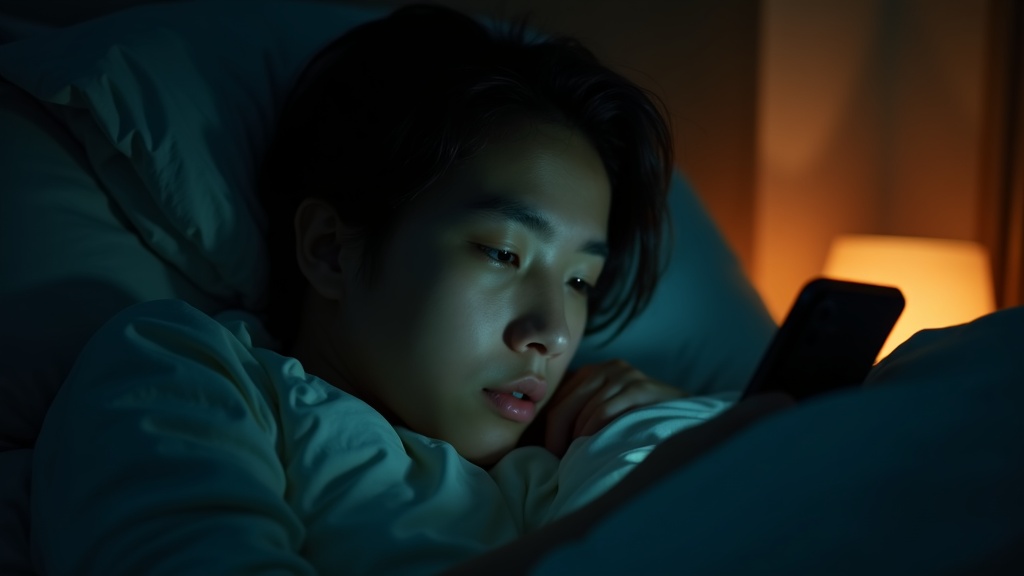
You’ve probably heard it a hundred times: looking at your phone before bed is terrible for your sleep. Put it away. Banish it from the bedroom. Turn it off at sunset if you want any hope of sleeping well.
But here’s the thing. Not all phone use is created equal.
Scrolling through social media for an hour might wreck your sleep in ways that checking tomorrow’s weather forecast doesn’t. Watching an intense thriller could affect you differently than listening to a calm podcast with your eyes closed. Even the brightness of your screen and how close you hold it to your face can change the impact.
The blanket advice to avoid all screens treats your phone like a single sleep-destroying force. But your phone is really just a gateway to dozens of different activities, each with its own effect on your brain and body. Some flood you with stress or excitement. Others are relatively harmless, or even relaxing.
So instead of asking whether phones are bad for sleep in general, it makes more sense to ask which specific phone habits actually matter. What you’re doing on your phone, for how long, and when you’re doing it all play a role. Understanding these differences means you can make smarter choices without giving up your device entirely or feeling guilty every time you glance at a screen after dinner.
When the screen itself is the problem
Your phone screen is basically a little light box that you hold inches from your face. That sounds obvious, but it matters more at night than you might think.
When bright light hits your eyes after dark, your brain can get confused about what time it is. It’s not magic or complicated biology. It’s just that for most of human history, bright light meant daytime. So your body interprets that glow as a signal that you should still be awake and alert.
The closer and brighter the light, the stronger that signal tends to be. This is why scrolling through your phone with full brightness in a completely dark bedroom is particularly good at keeping you wired. You’re basically shining a flashlight at your face while your brain is trying to figure out if it’s allowed to get sleepy yet.
The type of light matters a bit too. Phone screens give off a lot of blue-ish light, which seems to be especially good at telling your brain it’s daytime. That’s why night mode and those warm orange screen filters exist. They shift the light toward the red end of the spectrum, which is less stimulating.
But dimming your screen and using night mode doesn’t magically solve everything. A dimmed phone in a dark room is still a bright object demanding your attention. And if you’re scrolling through something engaging or stressful, the content itself might be doing more to keep you awake than the light ever could.
Using your phone in a room with other lights on tends to be less disruptive than in total darkness. The contrast matters. Your eyes and brain aren’t getting such a jarring signal when there’s ambient light around you.
When it’s not the screen, it’s what you’re doing on it
Not all phone time is created equal when it comes to sleep. Setting a quick alarm or putting on a calming playlist? That’s unlikely to keep you awake. Scrolling through arguments on social media or catching up on work emails at 11 PM? That’s a different story.
The difference comes down to what researchers call mental arousal, but you can think of it as how spun up your brain gets. When you engage with emotionally charged or mentally demanding content, your mind doesn’t just stop processing the moment you put the phone down. Your thoughts keep racing. You might replay that tense comment exchange, worry about tomorrow’s presentation, or feel anxious about the news you just read.
This mental spin-up effect is why some people can listen to an audiobook chapter and drift off easily, while others lie awake for an hour after watching a dramatic video or playing a competitive game. The screen itself isn’t necessarily the problem. It’s that your brain is still chewing on what happened.
Of course, what counts as calming versus stimulating varies from person to person. Some people find a few minutes of a familiar game relaxing. Others find any social media scrolling gets them worked up. The key is noticing how you feel after different activities. Are you more settled, or are your thoughts buzzing?
If you’re struggling to fall asleep and you’ve been on your phone beforehand, it’s worth asking what you were actually doing on it. The answer might matter more than how long the screen was on.
Why timing matters more than total screen time
You might spend two hours on your phone in the evening and feel fine about it. But here’s the thing: those two hours hit differently depending on when they happen.
Using your phone from 6 to 8 PM usually won’t mess with your sleep much. Your body isn’t trying to wind down yet. You’re still in daytime mode, and your brain can handle the stimulation without much consequence.
But that same amount of screen time from 10 PM to midnight? That’s a different story. You’re now using your phone during the exact window when your body is trying to shift into sleep mode. Every swipe and scroll can nudge your internal clock a little later.
The real problem isn’t the total time you rack up. It’s what happens in that final stretch before bed. Your body sends out natural sleepiness signals, those subtle cues that say it’s time to start shutting down. When you’re absorbed in your phone, those signals get drowned out.
We’ve all been there. You tell yourself you’ll watch one more video or read one more thread. Then suddenly it’s 45 minutes later and you’re wide awake. Each piece of content resets your attention, making it easier to push bedtime back just a little further.
This pattern sneaks up on you because the phone use itself doesn’t feel harmful. You’re just relaxing, right? But you’re actually training your brain to stay alert exactly when it should be powering down. The timing turns ordinary screen time into something that actively works against sleep.
How your phone can interrupt sleep even after you fall asleep
You might fall asleep just fine with your phone nearby. The real trouble starts at two in the morning when it lights up your bedroom like a tiny lighthouse.
Every buzz, ping, and flash pulls your brain a little closer to wakefulness. Even if you don’t fully wake up, these interruptions break up the natural flow of your sleep cycles. You might not remember them in the morning, but your body definitely notices.
The worst part is when you do wake up enough to check what’s happening. Maybe it’s a group chat that’s inexplicably active at 3 AM. Maybe it’s a work email that could absolutely wait until morning. Or maybe you just wanted to check the time.
That innocent time check is where things go sideways. You see a notification. Just one quick look won’t hurt, right? Twenty minutes later you’re deep in social media, reading news articles, or shopping for things you don’t need.
Even brief wake-ups add up over a night. Three or four small interruptions might only total ten minutes, but they can make you feel like you barely slept at all. Your brain never gets the long, uninterrupted stretches it needs to do its nightly maintenance work.
Some people wake up feeling exhausted and blame their mattress or stress. Meanwhile, their phone spent the whole night acting like an overeager assistant, making sure they didn’t miss a single irrelevant notification.
Why keeping the phone in bed makes the habit harder to break
Your brain is really good at linking places with actions. When you scroll through your phone in bed night after night, your bed stops being just a place to sleep. It becomes the place where you check Instagram, answer emails, or watch videos. That connection gets stronger every time you do it.
This is why reaching for your phone at bedtime can feel automatic. You’re not necessarily making a conscious choice. You climb into bed, and your hand just goes to the nightstand. The phone is right there, so you pick it up. It’s like walking into your kitchen and opening the fridge without really deciding to do it first.
The setup of your bedroom matters more than you might think. If your phone charges on your nightstand, it’s within arm’s reach all night. You’ll use it as your alarm, which means it’s the first thing you touch in the morning and the last thing you see at night. That’s a lot of opportunities for your brain to reinforce the bed-phone connection.
Compare that to someone who charges their phone across the room. They might still use it before bed, but they’re doing it somewhere else—at a desk, on the couch, standing in the hallway. Then they walk to bed empty-handed. The bed stays linked mainly with sleep, not with scrolling.
The same goes for alarms. A separate alarm clock might seem old-fashioned, but it breaks one major reason to keep your phone within reach. You can still use your phone before bed if you want. You’re just changing where that happens, and where it doesn’t.
Which phone habits tend to be the biggest sleep disruptors
Not all phone use hits your sleep the same way. Some habits create bigger problems than others, and which one matters most depends on how you personally react.
The single biggest disruptor for most people is notifications and nighttime checking. When your phone pings at midnight or you wake up and immediately reach for it, you’re jolting your brain into alert mode. That notification could be nothing, or it could be something that gets your mind racing. Either way, you’ve interrupted the calm your body needs to fall asleep or stay asleep.
Close behind is the content itself. Scrolling through upsetting news, getting into arguments online, or watching something intense right before bed keeps your emotional system fired up. Your brain doesn’t have an off switch. It needs time to wind down, and stimulating content works directly against that.
Then there’s the bright screen in a dark room. This is where blue light enters the picture, but the issue is really about contrast. A glowing rectangle in total darkness tells your brain it’s still daytime. The same screen in a lit room is far less disruptive, which is why context matters.
Finally, there’s the time creep problem. You think you’ll scroll for five minutes, and suddenly it’s an hour later. You haven’t necessarily seen anything disturbing or gotten any notifications. You’ve just accidentally stolen an hour from your sleep window.
Your top disruptor might not match someone else’s. Some people can watch videos unbothered but spiral over a single text. Others lose track of time but never check their phone once they’re in bed. The phone itself isn’t the problem. The specific way you’re using it is.
Small changes that can reduce the impact without giving up your phone
You don’t need to ban your phone from the bedroom to sleep better. Small adjustments to how you use it can make a real difference, especially if you match the change to the specific problem you’re dealing with.
If bright screens leave you feeling wired, try dimming the display or switching to night mode earlier in the evening. These settings reduce the harshness of the light without changing what you’re doing. Some people also find it helpful to switch from scrolling to listening once they’re in bed. An audiobook or podcast gives your eyes a break while still letting you wind down with something engaging.
If you’re getting pulled into stressful or stimulating content, consider what you’re actually looking at. Swapping out news feeds or work emails for something calmer can shift the tone of your last hour before sleep. It’s not about the phone itself, but what it’s putting in your head.
For people who lose track of time, choosing content with a natural ending helps. A single article or a short video gives you a built-in stopping point, unlike an endless scroll. And if notifications keep lighting up your screen after you’ve put it down, silencing them or using do not disturb mode can stop those small disruptions from adding up.
Moving your charger a few feet away from the bed can also help. You’re less likely to reach for your phone in the middle of the night if it takes actual effort. And if you’re someone who scrolls right up until you close your eyes, even a five-minute buffer between putting the phone down and trying to sleep can give your mind a moment to settle.





