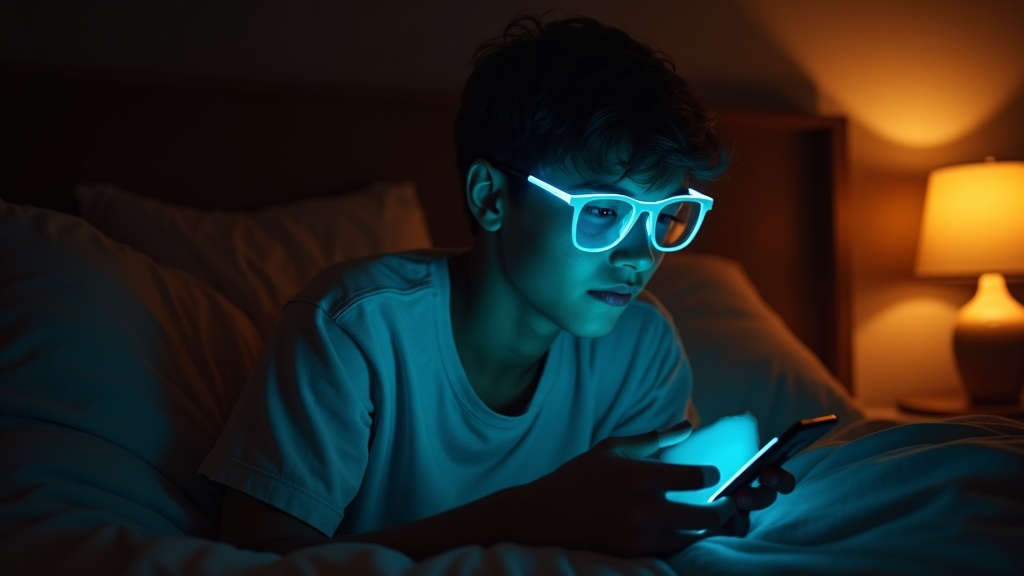
You’ve probably seen them advertised everywhere. Blue light glasses promise better sleep, less eye strain, and relief from our screen-soaked lives. But when you’re lying in bed at midnight after scrolling through your phone, do these amber-tinted lenses actually do anything useful?
The short answer is: it depends. Not on the quality of the glasses, necessarily, but on how you use screens before bed and what’s really keeping you awake.
Blue light glasses work on a simple idea. Your brain uses blue light as a signal that it’s daytime. When you stare at a bright screen in the evening, your body gets confused and delays the release of melatonin, the hormone that makes you sleepy. Block that blue light, the theory goes, and your brain will realize it’s actually nighttime.
That logic sounds reasonable. And for some people, blue light glasses do seem to help. But here’s the catch: the glasses only address one piece of a much bigger puzzle. Your phone isn’t just blasting blue light into your eyes. It’s also serving you stimulating content, keeping your mind active, and creating habits that have nothing to do with light wavelengths.
So before you spend money on a pair, it helps to understand what blue light glasses can and cannot fix. They’re not magic sleep goggles. But they might be worth trying if your particular sleep problems match what they’re designed to solve.
What blue light glasses actually block (and what they don’t)
Blue light glasses are tinted lenses that filter out some of the blue wavelengths coming from your screens and indoor lighting. Think of them like sunglasses, but much more selective. Instead of dimming everything, they’re designed to catch specific colors of light while letting most other light through normally.
Here’s the tricky part: not all blue light glasses block the same amount of blue light. Some filter out maybe 20 percent of blue wavelengths. Others block closer to 80 or 90 percent, and those usually have a noticeable orange or amber tint. When a company says their glasses offer “blue light protection,” that term alone doesn’t tell you much. It’s like saying a car has “good gas mileage” without mentioning the actual number.
It’s also worth knowing what these glasses don’t do. They don’t block all light, so your room won’t suddenly go dark. They don’t stop you from doomscrolling at midnight or silence your notification pings. And they definitely don’t make you drowsy on their own. If you’re wired from caffeine or stress, glasses won’t override that.
What they can do is reduce the amount of blue light hitting your eyes in the hours before bed. That matters because blue light is particularly good at signaling to your brain that it’s daytime, which can interfere with your natural wind-down process. But whether that reduction is enough to actually help you sleep better depends on how much blue light they block and how you’re using screens in the first place.
How evening light can affect melatonin and bedtime
Your body relies on light to figure out what time of day it is. When it’s bright out, your brain gets the message that it’s time to be awake and alert. When it gets dark, your body starts producing melatonin, a hormone that helps you feel sleepy and ready for bed.
The problem is that modern life doesn’t follow the sun’s schedule. When you’re scrolling through your phone in bed, your face is just inches from a glowing screen. When you watch TV late at night, you’re staring at a bright rectangle in an otherwise dark room. Even those cool-white LED bulbs overhead after dinner can send a signal that the day isn’t quite over yet.
This is where blue light enters the conversation. Blue-leaning light, the kind that comes from screens and many LED lights, is particularly good at telling your brain it’s still daytime. It doesn’t take much of it to interfere with that natural wind-down process.
But blue light isn’t the whole story. Brightness matters too. A dim screen in a dark room can still be enough to delay sleepiness, even if it’s not very blue. And timing is key. Light exposure at nine or ten at night has a bigger impact on your sleep readiness than the same light at six in the evening.
For some people, this evening light exposure doesn’t seem to matter much. They fall asleep just fine. But for others, especially those who already struggle to feel sleepy at a reasonable hour, that extra light signal can genuinely push bedtime later than they’d like.
When blue light glasses are most likely to help in real life
Blue light glasses seem to help most when you’re doing something specific: staring at a bright screen in the hour or two before bed. If you’re scrolling through your phone under the covers, playing video games at eleven at night, or reading on a tablet in a dark room, that’s when the glasses might actually make a difference.
The key is proximity and brightness. Holding a glowing screen close to your face sends a lot of blue light straight into your eyes. That’s different from having a TV across the room or working on a laptop in the afternoon. If you regularly find yourself wide awake after a late-night binge-watch or can’t stop checking your phone at two in the morning, blue light glasses could help you feel ready for sleep a bit sooner.
Some people also notice a difference if they’re sensitive to light in general. If bright overhead LEDs make you feel alert late at night, or if you wake up and immediately grab your phone to check the time, glasses might help you wind down more easily. You’re not going to knock yourself out, but you might feel less wired.
The change is usually subtle. You might realize you’re yawning earlier than usual, or that your brain doesn’t feel quite as buzzy after screen time. Some people say they fall asleep faster on nights when they wear them. Others don’t notice much at all.
If your screen time happens earlier in the day, or you already dim your devices at night, the glasses probably won’t do much. They’re not a magic fix, just a small tool that works better for some habits than others.
Why they might not help much, even if you wear them
Blue light isn’t the only thing keeping you awake when you’re on your phone or laptop at night. The content itself matters just as much, maybe more. Watching a thriller, scrolling through stressful news, or getting sucked into an argument online fires up your brain in ways that a pair of glasses can’t dial down.
Then there’s the timing problem. If you’re wearing blue light glasses but still staring at a bright screen two minutes before you want to fall asleep, you’re not giving your body much of a heads-up that it’s bedtime. Your brain needs a wind-down period, and glasses don’t create that for you.
Some blue light glasses also just don’t block enough light to make a real difference. The tint might be barely noticeable, which is nice if you care about aesthetics, but not so helpful if you’re trying to actually filter out the wavelengths that mess with melatonin. If the lenses are clear or only slightly yellow, they’re probably letting most of the blue light through.
And here’s the bigger picture: if your sleep problems stem from something else entirely, glasses won’t touch it. Anxiety about tomorrow’s meeting, three cups of coffee after lunch, chronic pain, a partner who snores, or simply not having a regular bedtime all affect your sleep quality in ways that have nothing to do with screens. Blue light glasses can only address one narrow piece of the puzzle, and for many people, that piece isn’t even the main problem.
How to try blue light glasses in a way that gives a fair answer
The best way to figure out if blue light glasses actually work for you is to test them without turning your entire life upside down. Pick a normal week where you’re not traveling or dealing with anything unusual. Get a pair of blue light blocking glasses and commit to wearing them during your regular evening screen time for at least five or six nights.
The key is to keep everything else the same. Don’t suddenly start going to bed two hours earlier or cut your screen time in half. Use your phone, watch TV, or work on your laptop just like you normally would. The only change is wearing the glasses for the last hour or two before you plan to sleep.
While you’re testing them, pay attention to a few simple things. Does sleepiness actually show up when you expect it to, or are you still wired at midnight? Do you find yourself saying “just one more episode” less often? When you finally get into bed, does sleep come easier or does your mind still race?
One thing worth keeping consistent is your screen brightness. If you usually have your phone on full blast and suddenly dim it way down while wearing the glasses, you won’t know which change made the difference. Also notice what you’re actually watching or reading. Falling asleep faster might have less to do with the glasses and more to do with switching from intense thrillers to calm cooking shows.
This isn’t about collecting data or being scientific. It’s just about noticing whether something feels different in a way that actually matters to your sleep.





