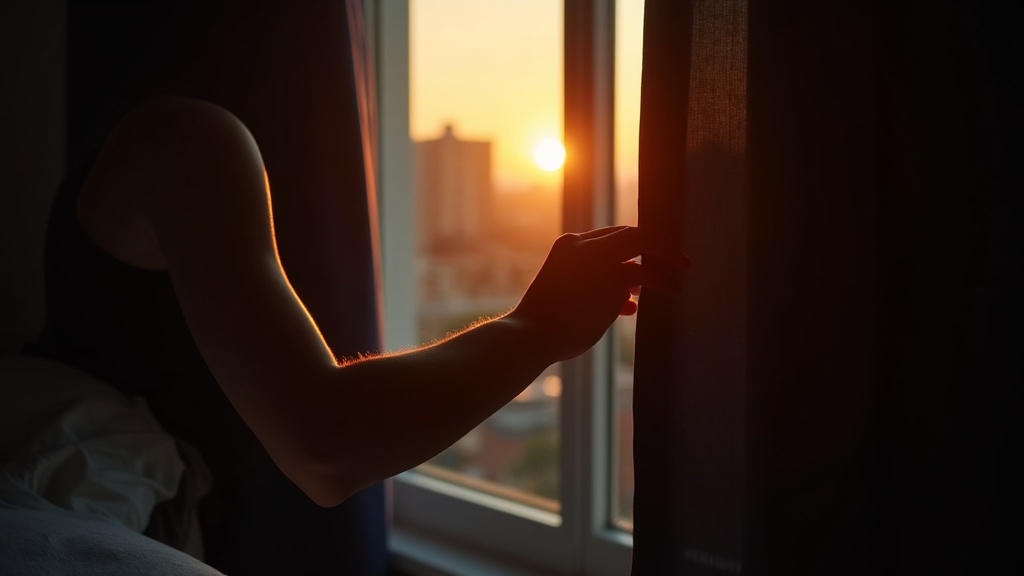
You might not realize how much light sneaks into your bedroom at night. Streetlamps glowing through the window. The neighbor’s porch light. Even the soft blue glow from a charging phone or digital clock. All of it adds up, and your brain notices even when you don’t.
Our bodies are wired to wake up when it’s light and wind down when it’s dark. That’s how humans have worked for thousands of years. But modern life floods our nights with artificial light, and it doesn’t just make the room brighter. It actually interferes with the signals your body uses to fall asleep and stay asleep.
Most people try to ignore it. They get used to the glow from outside or convince themselves it doesn’t matter. But even a small amount of light can keep your brain from fully relaxing into deep, restorative sleep. You might fall asleep fine, but wake up feeling tired anyway.
That’s where blackout curtains come in. They’re not just thick drapes or a decorating choice. They’re designed to block outside light completely, creating the kind of darkness your body actually needs. It sounds almost too simple to make a real difference, but changing your sleep environment this way can have a surprisingly powerful effect on how you feel each morning.
If you’ve ever wondered why you still feel groggy despite getting enough hours in bed, the answer might be hanging in your window.
The light in your bedroom may be brighter than you think
Close your eyes and picture your bedroom at night with all the lights off. Seems pretty dark, right? Now open your eyes and actually look around. You might be surprised at how much light is really there.
If you live in a city or suburb, light creeps in from everywhere. Streetlights cast an orange or white glow through your windows. A neighbor’s porch light might shine directly at your wall. Car headlights sweep across your ceiling every time someone drives by. Even that neon sign from the convenience store down the block can find its way into your room.
Then there’s the light you’re making yourself. Your alarm clock probably glows red or blue. Your phone charger might have a little LED. Cable boxes, air purifiers, humidifiers, even smoke detectors often come with tiny lights that seem harmless during the day but add up at night. If you leave your bedroom door open, hallway nightlights or light from other rooms can spill in too.
The tricky part is that you’ve probably gotten used to all of it. Your brain adapts to consistent light sources, so you stop noticing them. You might think your room is dark because you can’t read a book without a lamp. But true bedroom darkness means you shouldn’t be able to see your hand clearly when you hold it up in front of your face.
Most bedrooms fall somewhere in between. They’re dim enough that you don’t think about it, but bright enough that your body knows it’s not completely dark. And that difference matters more than you might expect.
Why darkness supports melatonin and deeper sleep
Your body runs on an internal clock that depends heavily on light cues. When your eyes detect light, your brain interprets it as daytime. That signal tells your body to stay alert and awake. When it gets dark, your brain starts producing melatonin, a natural chemical that makes you feel sleepy and helps you drift off.
The problem is that even small amounts of light can interfere with this process. A streetlight glowing through your window, the glow from a nearby building, or early morning sun sneaking through the curtains can all send mixed signals to your brain. Your body might delay melatonin production, leaving you lying awake longer than you’d like. Or it might produce less of it, making your sleep feel lighter and less restful.
This becomes especially noticeable in the early morning hours. If sunlight starts brightening your room at five or six in the morning, your brain may start winding down melatonin production before you’re actually ready to wake up. You might find yourself stirring earlier than you planned, or sleeping more lightly during those last critical hours when your body does some of its deepest restoration work.
The effect isn’t dramatic enough that you’d notice it after one night. But over time, these small disruptions add up. You might feel like you’re sleeping enough hours but still waking up tired. That’s often because the quality of your sleep has been quietly compromised by light you barely noticed was there.
What blackout curtains actually change in your sleep environment
Blackout curtains do one thing really well: they block light from getting into your room. That sounds obvious, but it matters more than you might think. Regular curtains filter light or soften it. Blackout curtains actually stop it at the window.
The most noticeable change happens during early morning hours. If you live somewhere with bright summer sunrises at five in the morning, blackout curtains keep your room dark until you actually want to wake up. The same goes for streetlights, car headlights, or that annoying security light from your neighbor’s driveway. Your sleep environment stays consistently dark instead of shifting with whatever’s happening outside.
People who work night shifts notice the difference most. Trying to sleep during the day with regular curtains is hard because your brain keeps getting signals that it’s daytime. Blackout curtains make daytime sleep actually possible by creating that nighttime darkness your body expects.
There are some bonus effects too. Most blackout curtains are made with thicker fabric or special linings, so they also block a bit of outside noise and help keep your room cooler in summer or warmer in winter. But these are side benefits, not the main event. Don’t expect them to turn your bedroom into a soundproof studio or replace your air conditioning.
What they won’t do is magically fix every sleep problem you have. If you’re stressed, drinking coffee at nine at night, or scrolling your phone in bed, blackout curtains aren’t going to override those things. They just remove light as a problem, which for many people turns out to be a bigger deal than they expected.
Who tends to notice the biggest difference
Some people install blackout curtains and feel transformed. Others barely notice a change. The difference usually comes down to how much unwanted light was sneaking into your bedroom in the first place.
City dwellers tend to see dramatic improvements. If you live near streetlights, neon signs, or buildings that stay lit all night, your bedroom probably never gets truly dark. You might not consciously notice the glow, but your brain does. The same goes for anyone with an east-facing bedroom who gets blasted by sunrise at five in the morning during summer months.
Shift workers who sleep during the day are another group that benefits enormously. Trying to convince your body it’s nighttime when the sun is streaming through your windows is an uphill battle. Blackout curtains level the playing field.
Households with mismatched schedules see real value too. If your partner leaves for work at dawn and morning light wakes you up two hours before your alarm, or if your teenager’s desk lamp glows under the door at midnight, controlling light becomes essential for everyone to get decent rest.
There are also people who are just naturally light-sensitive sleepers. If you already use an eye mask, wake up the moment the sky starts getting light, or notice you feel oddly tired even after sleeping a full eight hours, light might be quietly disrupting your sleep cycles. These are the folks who often report feeling genuinely different once their bedroom stays dark until they’re ready to wake up.
If none of these situations sound familiar and your bedroom already feels comfortably dark at night, blackout curtains might not make a noticeable difference for you. And that’s perfectly fine.
How to set them up so they actually block light
You hang your new blackout curtains, step back to admire your work, and then night arrives. That’s when you notice the glow seeping in from every edge like your window is trying to escape. It’s frustrating, but also fixable.
The biggest problem is almost always the gaps. Light sneaks in at the top where the curtain rod leaves space between the fabric and the ceiling. It creeps around the sides where the curtains don’t reach the wall. And it often pours through the middle where two panels meet but don’t quite overlap.
Here’s something that surprises people: even a thin sliver of light feels incredibly bright once the rest of your room is dark. Your eyes adjust to the darkness, which makes that little gap at the top suddenly look like a spotlight. It’s not that the curtains aren’t working. It’s that they’re working so well everywhere else that the leaks become obvious.
The simplest fix is to get panels that are wider than your window. This lets you extend the fabric past the frame on both sides, blocking those edge gaps. You can also mount your curtain rod closer to the wall instead of far out into the room, which helps the fabric sit flush against the surface.
For the gap in the middle, make sure your panels overlap generously rather than just touching. Some people add a little hook or magnet to keep them closed at night.
The bottom matters too. Curtains that hover a few inches above the floor let light bounce up and scatter around the room. Panels that reach the floor or even puddle slightly do a better job containing the darkness.





