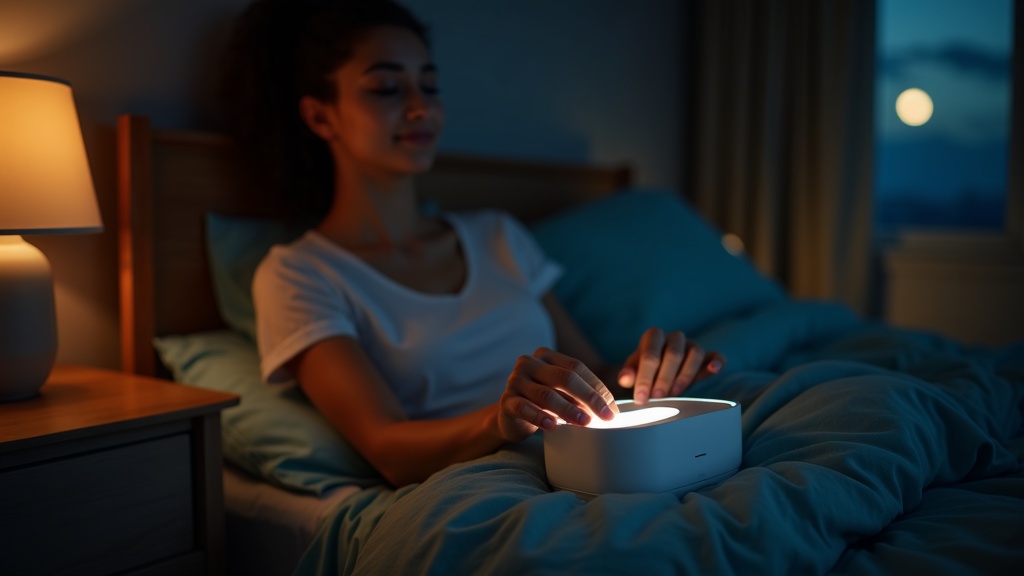
You’ve probably spent more time choosing a white noise machine than you ever expected. Dozens of options. Conflicting reviews. One person swears by their machine while another calls the exact same model annoying. It’s enough to make you wonder if there’s some secret knowledge you’re missing.
Here’s the truth: there isn’t. The best white noise machine for sleep isn’t hiding behind complicated specs or premium price tags. It’s the one that actually fits how you sleep and where you sleep.
Most buying guides throw feature lists at you without explaining what any of it means in your bedroom at two in the morning. They’ll compare decibel ranges and speaker quality like you’re setting up a home theater. But you’re not trying to impress anyone. You’re trying to drown out your partner’s snoring or block the traffic noise that wakes you up before your alarm.
That’s why this guide focuses on real-world fit instead of technical one-upmanship. We’ll talk about how different types of white noise actually sound when you’re trying to fall asleep. We’ll cover what matters in a small apartment versus a large bedroom. And we’ll help you figure out whether you need something that travels with you or just sits on your nightstand.
The goal isn’t to find the objectively best machine. It’s to find the one you’ll actually use and appreciate six months from now, not the one that looked impressive in the product photos.
Start by naming what you’re trying to block
Before you compare features or read reviews, stop and think about what actually wakes you up. Not all noise is created equal, and that difference matters more than you’d think.
There are two basic types of noise that disturb sleep. The first is steady background hum: traffic outside your window, a neighbor’s air conditioner, the refrigerator running in the next room. The second is sudden, sharp sounds: a door slamming down the hall, your partner’s alarm going off, a dog barking at three in the morning.
White noise machines handle these two problems differently. They’re genuinely good at covering up steady background noise. The constant sound creates a kind of acoustic blanket that makes that distant traffic or humming appliance fade into the background. Your brain stops noticing it.
Sharp, sudden noises are trickier. A white noise machine won’t make a slammed door disappear. But it can soften the shock of it. Think of it like this: if your bedroom is dead silent, a sudden sound feels like an alarm. If there’s already gentle sound filling the room, that same noise doesn’t jolt you awake as easily. It blends in a bit.
So ask yourself: are you dealing with a steady drone that keeps you from falling asleep in the first place? Or are you being woken up by unpredictable sounds once you’re already out? The first problem needs consistent, reliable sound. The second needs something you can turn up quickly when you need it, without fumbling in the dark.
Choose a sound that your brain can ignore
Here’s the thing nobody tells you: a white noise machine with five-star reviews might still drive you absolutely bonkers. The sound itself matters more than any fancy feature, and what works for someone else might keep you awake all night.
White noise is the classic static-y hiss, like an old radio between stations. It’s bright and covers a wide range of sounds. Pink noise is similar but deeper, like steadier rainfall or wind through trees. Brown noise goes even lower, with a rumbling quality that some people compare to distant thunder or a waterfall. None of these is objectively better. It’s completely personal.
Many machines also offer nature sounds like rain, ocean waves, or fan noise. These can be easier to ignore than pure noise colors because your brain recognizes them as natural. But they can also be distracting if they’re too detailed. A recording of rain that includes individual droplets hitting leaves might grab your attention instead of fading into the background.
Here’s a quick test before you buy: listen to a sample for 30 to 60 seconds, then imagine hearing it for eight straight hours. Does it feel soothing, or does something about it grate on you? Some people find high-pitched sounds irritating. Others can’t stand low rumbles. Pay attention to your gut reaction.
If you’re shopping in person, close your eyes and listen. If you’re online, find audio samples on YouTube or the manufacturer’s website. The goal is to find a sound that disappears once you stop focusing on it. That’s the sound your brain can actually ignore.
Watch out for looping sounds that your mind notices at 3 a.m.
Here’s something nobody warns you about until you’ve already bought the machine: some white noise devices play short recordings on repeat. You might not notice it in the store or during the first night. But after a few days, your brain starts picking up the pattern.
It might be a subtle swell in volume that happens every forty seconds. Or a faint crackling sound that repeats in the same spot. Some rain sounds include a specific droplet pattern you start to anticipate. Once you notice it, you can’t un-notice it.
The problem is that recognizing patterns wakes up the part of your brain that’s supposed to be winding down. Your mind starts waiting for the loop to restart. You’re no longer hearing neutral background sound. You’re listening.
The best machines avoid this in one of two ways. Some generate sound continuously using internal electronics, so there’s never an exact repeat. Others use recordings that are long enough that your brain never catches the seam where it loops back to the beginning. We’re talking twenty minutes or more, not two.
Testing for loops is simple. When you first get a machine, sit with it for five minutes and pay close attention. Can you hear a repeating point? Then try again while reading or doing something else. If you find yourself unconsciously tracking when the sound will restart, that’s your answer.
This might seem like a small thing, but it’s one of the top reasons people return their machines after a week. Your sleep brain is pickier than your daytime brain.
Make sure the volume range and controls match real bedtime use
A white noise machine that works beautifully in the store can turn into a nightly headache if the volume is too soft to cover your neighbor’s TV or too loud at its lowest setting for a quiet bedroom. You need a machine that can go loud enough for your actual noise problem, whether that’s street traffic or a snoring partner, but also dial down gently when you just want subtle background sound.
The difference between five volume steps and twenty might not sound important until you’re lying in bed realizing that level three is too quiet and level four is too jarring. Machines with fine-grain control let you find that sweet spot where the sound masks disturbances without becoming distracting itself.
Just as important is how you adjust the volume at two in the morning when you’re half-asleep. Big, tactile buttons you can find without turning on a light are infinitely better than tiny touch controls or needing to unlock your phone. The best machines remember your last setting so you’re not fiddling with controls every single night.
Watch out for common annoyances that manufacturers somehow overlook. Some machines have bright LED displays that light up your entire room. Others beep loudly every time you press a button, which defeats the purpose of a sleep device. A few require cycling through multiple sound modes just to adjust volume, turning a simple task into a frustrating game of trial and error.
Before you buy, think about whether you’ll use it in different situations. A machine perfect for home might be too bulky for travel, or one great for a small apartment might lack the power needed for a larger bedroom with thin walls.
Match the machine to your bedroom layout and habits
Where you put a white noise machine matters as much as which one you buy. A machine that sounds perfect on your nightstand might feel too quiet if you need to place it across the room because that’s where your only outlet is.
Think about your actual bedroom setup before you shop. If your nightstand is tiny or already crowded with a lamp, phone charger, and water glass, a bulky machine won’t work no matter how good it sounds. Some machines need to stay plugged in, so check if you have an outlet within reach or if you’ll need an extension cord snaking across the floor.
Distance changes everything. A machine three feet from your head sounds much louder than the same machine ten feet away. If you’re trying to block noise coming from a specific direction, like a hallway door or a street-facing window, placing the machine between you and that noise source works better than putting it on the far side of the bed.
Sharing a bed adds another layer. If your partner snores lightly, a machine on your nightstand might be enough to mask it for you without bothering them. But if you’re the light sleeper and they couldn’t care less about ambient sound, you might want something you can position closer to your side.
Apartment dwellers dealing with hallway noise or thin walls often do better with a machine near the door. Early risers dealing with garbage trucks at dawn might want theirs closer to the window. The goal isn’t to drown out everything, just to make those specific disruptions less jarring.
Portable machines with rechargeable batteries give you more placement freedom, but they’re usually quieter overall. That’s fine for hotel rooms but might not cut it at home if you’re blocking out louder, more persistent sounds.
Decide if you need a home device, a travel companion, or both
The white noise machine that works beautifully on your nightstand might feel like a brick in your suitcase. And that tiny travel version you toss in your bag? It might sound tinny or too quiet for regular bedroom use.
Home models are usually larger, plug into the wall, and prioritize sound quality over portability. They often have better speakers and more volume for blocking out street noise or a snoring partner. But they’re heavy, awkward to pack, and useless during a power outage unless they have a battery backup.
Travel devices are compact and run on rechargeable batteries, which sounds perfect until you realize the battery might only last four or five hours. If you’re a light sleeper who needs white noise all night, you could wake up to silence at three in the morning. Some models restart automatically when the battery dies and you plug them in. Others don’t, which means you’re fumbling with buttons in the dark.
Durability matters too. A travel machine bouncing around in your luggage needs to survive the jostling without turning on accidentally and draining the battery. Look for models with button locks or cases that prevent this.
Think about your actual routine. Do you travel twice a month for work? You need something truly portable with decent battery life. Moving a machine between your bedroom and a nursery down the hall? A plug-in model works fine. Splitting time between two apartments? You might just buy two inexpensive units instead of hauling one back and forth.
Some people solve this by keeping a plug-in model at home and buying a cheap backup for trips. It’s not elegant, but it works better than compromising on either situation.
Be honest about whether you want simple or smart
Some white noise machines have a single dial and an on-off switch. Others connect to your phone and let you adjust everything from an app. Neither is better. They’re just built for different people.
Simple machines are fast. You twist a knob, choose a sound, and you’re done. There’s no setup, no account creation, no wondering if the Wi-Fi will drop overnight. If you just want noise that blocks out your neighbor’s TV, this approach works beautifully. You won’t be tempted to check your phone while you’re trying to wind down.
App-connected machines give you more control. You can set timers so the sound fades out after you’re asleep. You can schedule it to start before you even get into bed. Some let you layer sounds together or adjust specific frequencies. If you like tinkering with settings or want the machine to turn itself off automatically, that flexibility matters.
But app-connected devices come with trade-offs people don’t always expect. You need Bluetooth or Wi-Fi turned on, which some people find annoying. Apps get updated, and sometimes that changes how things work. Having your phone nearby to adjust settings can backfire if you end up scrolling instead of sleeping.
There’s also the question of whether you’re comfortable with a sleep device connecting to the internet. Some people don’t care. Others prefer their bedroom gadgets to stay offline.
Think about your actual bedtime routine. Do you want something you can operate in the dark without thinking? Or do you enjoy the idea of customizing your sleep environment from your phone? Your tolerance for tech at bedtime matters more than the feature list.
Plan for a short real-life trial so you don’t get stuck with the wrong one
The first night with a new white noise machine rarely tells the whole story. You need at least three or four nights to know if it actually works for your sleep.
Start by checking whether the sound bothers you when you wake up naturally during the night. Some machines have a tone that feels fine at bedtime but grating at three in the morning when you’re half-awake. If you find yourself consciously noticing the sound instead of just hearing background noise, that’s a red flag.
Test whether it actually blocks the sounds that bother you most. A truck rumbling past, your partner snoring, the neighbor’s dog—these are real-world problems, not lab conditions. Walk around outside your bedroom and make some noise while someone inside listens. It sounds silly, but it’s the only way to know if the machine does its job.
Pay attention to the small annoyances that only appear when you’re fumbling around in the dark. Can you adjust the volume quickly without fully waking up? Are there bright LEDs that light up your entire room? Does it beep when you press buttons at two in the morning? Some machines have auto-off timers that shut down right when you’re falling back asleep, which defeats the whole purpose.
If you share a bed, your partner gets a vote too. What sounds soothing to you might drive them crazy, or vice versa. A few nights of testing together will reveal whether this is going to work for both of you.
That’s why buying from somewhere with a decent return window matters. You’re not looking for loopholes or gaming the system. You just need enough time to sleep with it for real and decide if it’s actually helping.





