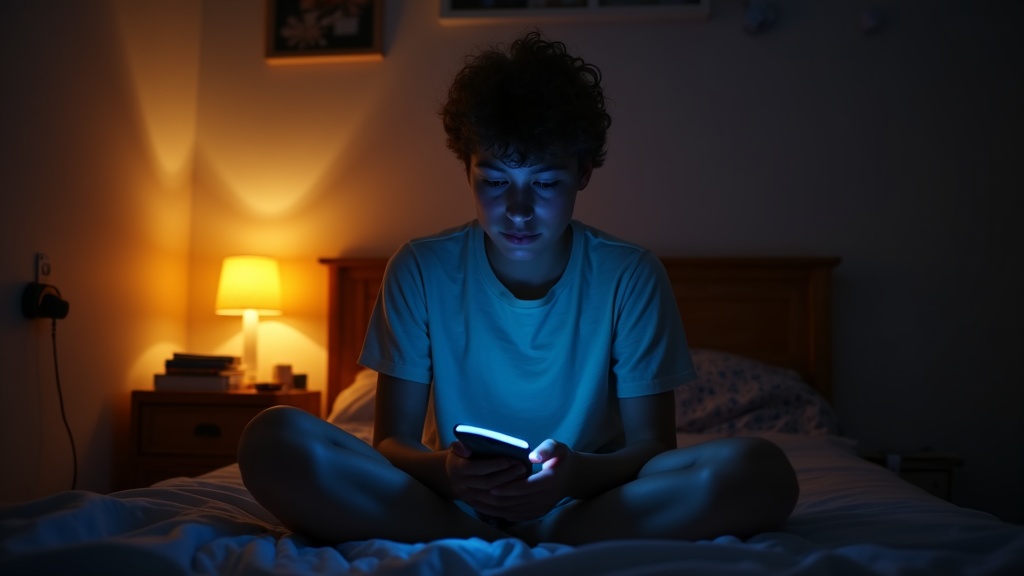
Your teenager is exhausted. You can see it in their eyes at breakfast, in the way they drag themselves to school, in how they collapse on the couch the moment they get home. You’ve told them to go to bed earlier. They’ve nodded, promised to try, and then stayed up until midnight anyway.
Here’s the uncomfortable truth: telling a teenager to just sleep more is like telling someone stuck in traffic to just drive faster. The road is jammed. Their friends are all online until eleven. Their homework legitimately takes until ten. Their brain won’t let them fall asleep before midnight even if they wanted to. And yes, their phone is part of the problem, but it’s also how they stay connected to everyone who matters to them.
This doesn’t mean you’re powerless. It means the old advice doesn’t fit the current reality. You can’t simply ban screens and expect a transformation. You can’t enforce a bedtime like they’re seven years old. What you can do is understand what’s actually keeping them awake and work with them to make realistic changes that might actually stick.
The goal here isn’t to create a perfect sleep routine that looks good on paper. It’s to help your teen get more rest in a world designed to keep them wired and awake. That means focusing on what’s actually doable, not what’s theoretically ideal. Small shifts that work beat perfect plans that don’t.
Why typical sleep advice falls apart for teens
Here’s the thing most sleep advice glosses over: your teenager’s body is actually wired to stay up late. Around puberty, their internal clock shifts forward by a couple of hours. What feels like a reasonable bedtime to you genuinely feels like mid-afternoon to them. They’re not being difficult. Their brain is telling them it’s not time to sleep yet.
Then there’s school. Most high schools start early, sometimes brutally early. So you’ve got a biology that says sleep later, and a schedule that demands waking earlier. It’s like permanent jet lag, except there’s no vacation at the end of it.
Add in the social piece, and it gets even trickier. Teens aren’t just scrolling mindlessly at midnight because they lack discipline. They’re staying connected because that’s when their friends are online. Group chats heat up after dinner. Games and conversations happen in real time. Logging off feels like walking out of a party that’s still going.
There’s a real fear of missing out, and it’s not imaginary. Social dynamics can shift in a single evening. Inside jokes get made. Plans get formed. For a teen, going to bed early can feel like choosing to be left behind.
So when the standard advice says “just turn off devices an hour before bed” or “stick to a consistent schedule,” it ignores all of this. It assumes the problem is simple laziness or bad choices. But most adolescent sleep problems aren’t about motivation. They’re about a mismatch between biology, schedules, and the very real social world teens are navigating every night.
Choose a realistic sleep target you can actually keep
Forget the fantasy bedtime where your teenager peacefully drifts off at nine thirty every night. That’s not happening, and chasing it will only create arguments neither of you will win.
Instead, start with what’s fixed: the time your teen actually has to wake up for school. Write that down. Now count backwards eight to nine hours. That’s the range where bedtime should probably land, at least on school nights.
Notice I said range, not exact minute. A teenager who goes to bed somewhere between ten and eleven most nights is doing better than one who crashes at midnight one night and nine the next. The goal is consistency, not perfection.
Weekends are trickier because nobody wants to wake up at six thirty on Saturday. But letting your teen sleep until two in the afternoon turns Sunday night into a battle zone. A better compromise is adding an hour or two to the weekend wake time, not five. If they’re up at seven for school, aim for eight thirty or nine on weekends.
Getting to that reasonable bedtime doesn’t happen overnight, especially if your teen is currently going to bed well past midnight. Try shifting it earlier by fifteen or twenty minutes every few days. Moving from twelve thirty to ten fifteen all at once feels impossible and usually fails. Creeping it back gradually actually sticks.
The real win here is having a target everyone agrees is realistic. When bedtime feels achievable instead of punitive, you spend less energy fighting and more energy actually getting there.
Make nights calmer by shrinking the decision pile
Around ten or eleven at night, the chaos often starts. Your teen suddenly remembers the permission slip that needs signing. Or realizes their phone charger is somewhere in the car. Or announces they’re starving and starts making pasta.
These aren’t acts of rebellion. They’re just the natural result of a day that ran on autopilot until it crashed into bedtime. But each small surprise adds another fifteen minutes, and suddenly it’s midnight.
The fix isn’t about being more organized in some perfect, color-coded way. It’s about moving a few key decisions earlier in the day, when everyone still has energy to think.
Packing the backpack right after homework means one less thing to remember at eleven. Picking tomorrow’s clothes while it’s still light out removes a decision from the sleepy brain. Putting phones and laptops in the same spot to charge every night means no hunting for cords when eyes are already closing.
If your teen gets hungry late, that’s normal. Growing bodies need fuel. But deciding earlier what the go-to snack will be saves the midnight kitchen project. Maybe it’s a granola bar on the nightstand. Maybe it’s a bowl of cereal that takes two minutes, not twenty.
The goal is to create a predictable wind-down that feels like relief, not like another chore. When fewer decisions pile up at the end of the day, bedtime stops feeling like a scramble. It starts feeling like something your teen can actually get to without a fight.
Handle screens like a negotiation, not a moral issue
Screens aren’t just entertainment for teenagers. They’re where friendships happen, where plans get made, and where missing one group chat can mean feeling left out the next day. That’s why just taking the phone away rarely works. It feels like punishment, and it ignores why the phone matters so much in the first place.
The real problem isn’t the screen itself. It’s that phones are designed to be endless. There’s always one more video, one more reply, one more thing to check. Social media apps are built to keep you scrolling. Group chats ping at random. And lying in bed with a glowing rectangle six inches from your face tells your brain it’s still daytime, which pushes sleep further away.
Instead of declaring war on technology, try treating it like a negotiation. Start by talking about what actually happens at night. Does your teen feel like they have to respond immediately, or do friends expect instant replies? Are certain apps more addictive than others? Understanding their reality makes it easier to find solutions they’ll actually follow.
Consider setting a shared quiet hours agreement that applies to the whole household, not just your teen. Maybe everyone’s phone charges in the kitchen after a certain time. Or maybe the rule is no notifications after ten, but texting a close friend back is still okay. The goal isn’t total disconnection. It’s reducing the interruptions and the endless scroll.
Small shifts often work better than hard bans. Suggest moving the most stimulating apps, like TikTok or Instagram, to earlier in the evening. Encourage do-not-disturb mode that still allows a few important contacts through. Focus on keeping the phone out of arm’s reach in bed, not out of the room entirely. When teens feel like they have some control, they’re far more likely to cooperate.
Use mornings to make nights easier
Here’s something that sounds too simple to work, but actually does: what happens in the first hour after your teen wakes up can change how they feel at midnight.
When your body gets bright light early in the day, it helps set an internal clock that makes you feel alert in the morning and sleepy at night. Movement does something similar. Together, they can nudge that “wide awake at 1am” feeling earlier, which is exactly what most teens need.
This doesn’t require a whole production. Open the blinds as soon as your teen is up. If they eat breakfast, suggest they sit near a window instead of in a dark corner of the kitchen. If they’re waiting for a ride or the bus, those few minutes outside count. Even a quick walk around the block helps.
The goal isn’t to become a morning person or start training for a marathon. It’s just about getting some daylight and a bit of movement into the early part of the day, when it actually does something useful for sleep later.
Will this single habit fix everything? No. But it’s one of the few things you can influence without another battle at bedtime. You’re not telling them to put their phone down or go to bed earlier. You’re just opening blinds and maybe suggesting toast by the window.
It won’t work overnight, and it won’t work if everything else is chaos. But it’s a surprisingly effective tool that doesn’t require cooperation at the exact moment when everyone’s already exhausted and arguing.
Make the bed a place to sleep, not to live online
Your teenager’s brain starts learning what the bed is for based on what they actually do there. If they scroll TikTok, finish homework, text friends, watch shows, and occasionally sleep in the same spot, their brain gets confused about what’s supposed to happen when they lie down.
It sounds almost too simple, but it matters. When the bed becomes the place for everything, it stops being the place that signals sleep. Your teen climbs in at midnight and their brain thinks it might be time to study, or scroll, or chat, because that’s what usually happens there.
The fix doesn’t require a room makeover. It just means finding other spots for other activities. Homework at a desk or kitchen table. Scrolling on the couch or a chair. Gaming somewhere that isn’t under the covers. Even sitting on the floor with a pillow works if space is tight.
This creates what you might call a mental boundary. Bed equals sleep. Everywhere else equals everything else.
A few other small shifts can help too. Switching to a dim lamp instead of overhead lights once evening hits can make the room feel calmer. Keeping the room a bit cooler than the rest of the house helps most people sleep better, though you don’t need to freeze anyone out. Some teens sleep better with a fan running, not just for temperature but for the steady background noise that covers up random sounds.
None of this requires spending money on blackout curtains or special mattresses. A chair borrowed from another room and a $10 lamp can do more than a Pinterest-perfect bedroom setup. The goal is just to make the bed feel different from the rest of their day.
Watch the sneaky sleep thieves: caffeine, naps, and late snacking
Your teen might not realize that the energy drink they grabbed at three in the afternoon is still bouncing around their system at midnight. Caffeine sticks around longer than most people think, especially in younger bodies that process it more slowly. That iced coffee at lunch or the soda with dinner can genuinely make falling asleep harder, even if your teen swears it doesn’t affect them.
The trick is finding a cutoff time that actually works. For most teens, stopping caffeine by early afternoon gives their body enough time to clear it out before bed. You might frame this as an experiment rather than a rule. Try suggesting they notice how they feel on days when they skip the late afternoon caffeine versus days when they don’t.
Late afternoon naps create their own problem. A long nap at five in the evening basically tells the body it’s already gotten some of its sleep quota, so why would it want to sleep again at ten? If your teen needs to nap, earlier and shorter works better. Twenty to thirty minutes in the early afternoon can help without stealing from nighttime sleep.
Then there’s the midnight snack that turns into a full meal. Eating a lot close to bedtime can make falling asleep uncomfortable, but going to bed genuinely hungry doesn’t help either. A light snack is fine. Think toast or fruit, not a three-course dinner.
When you bring these up, focus on cause and effect rather than rules. Instead of banning things outright, you might say something like, “I’ve noticed you seem to toss and turn more on nights when you have coffee late. Have you noticed that too?” It opens a conversation instead of closing one down.
Help with the racing mind that keeps teens awake
When the lights go out and the phone finally gets plugged in across the room, that’s when everything floods in. The awkward thing they said at lunch. The test next week. Whether anyone will show up to the thing on Saturday. The quiet that’s supposed to help them sleep becomes the exact moment when their brain decides to replay every worry on loop.
This isn’t dramatics or stalling. For teens, social pressure and academic stress are genuinely intense, and nighttime is when the defense mechanisms drop. There’s nothing left to distract from it all.
One surprisingly helpful tool is a five-minute brain dump before bed. Keep a notebook nearby and let them scribble out whatever’s spinning around up there. It doesn’t need to be organized or make sense. The act of getting it out of their head and onto paper can be enough to quiet things down.
A “tomorrow list” works similarly. Three things they need to handle the next day, written down so their brain can stop trying to remember. It’s not a to-do list meant to stress them out. It’s a way of telling their mind that yes, we’ve got it handled, now rest.
Calming audio can help too. Not necessarily sleep sounds, but something low-key they actually like. A familiar podcast, quiet music, even an audiobook they’ve heard before. The key is that it’s interesting enough to redirect anxious thoughts but not so gripping that it keeps them awake.
If you want to check in about what’s stressing them out, do it earlier in the evening, not at bedtime. Keep it low-pressure. Sometimes they’ll talk, sometimes they won’t. Respect that. Just letting them know you noticed and you’re available can matter more than the conversation itself.
Make it a team problem, not a nightly power struggle
Here’s the thing about nagging your teenager to get off their phone every single night: it doesn’t work. It just makes bedtime feel like a battlefield. And stress is one of the worst enemies of sleep. When your teen feels angry or defensive, their body floods with stress hormones that keep them wired long after the argument ends.
Instead of fighting the same fight every evening, try repositioning the whole thing. You’re not trying to control them. You’re both trying to solve a problem that’s making their life harder. Maybe they’re exhausted in the mornings, or their mood has been terrible, or they can’t focus on things they actually care about. These are shared goals you can work toward together.
Sit down when things are calm and frame it that way. You might say something like, “I’ve noticed mornings are really rough lately. I’m wondering if we could try something different with nights for a week and see if it helps.” Notice the “we” and the time limit. You’re proposing an experiment, not handing down a life sentence.
Let them have some input. Maybe they choose which part of their routine happens first, or which nights are slightly more flexible. The point isn’t to let them opt out entirely. It’s to give them enough ownership that they’re not just resisting your rules.
When you need to hold a boundary, keep it simple and calm. “I know you want to keep scrolling, and also we agreed phones stay out of the bedroom after eleven. Which do you want to do first tomorrow, shower or pack your bag?” You’re redirecting, not lecturing. You’re staying firm without turning it into a fight.
Will one conversation fix everything? No. But lowering the temperature around bedtime is half the battle.
Know when it’s more than habits
Sometimes the problem isn’t phones or routines. Sometimes something else is going on, and recognizing that early can make a real difference.
A few signs suggest it’s worth getting some professional input. If your teen snores loudly most nights, or you notice pauses in their breathing while they sleep, that’s worth mentioning to a doctor. The same goes for extreme daytime sleepiness that doesn’t improve even when they get more hours in bed.
Frequent morning headaches can be another clue that sleep isn’t doing its job properly. And if your teenager has tried good sleep habits consistently for a few weeks but still can’t fall asleep at a reasonable hour, that pattern might need outside help to untangle.
Pay attention to mood shifts that seem directly tied to sleep loss. We all get cranky when tired, but watch for bigger changes like withdrawal from friends, persistent irritability, or signs of real distress that don’t bounce back after a decent night’s rest.
Safety issues are also a clear signal. If your teen is driving or about to start, drowsy driving is genuinely dangerous. Falling asleep during the day in concerning situations means it’s time to talk to someone.
Your starting point can be simple. A primary care doctor or school counselor is a good first conversation. Before you go, jot down what you’ve noticed: rough sleep and wake times for a week or two, daytime symptoms, anything that stands out. You don’t need a formal sleep diary, just enough detail to paint the picture. These professionals can help figure out whether it’s a matter of tweaking habits or whether something else deserves attention.







