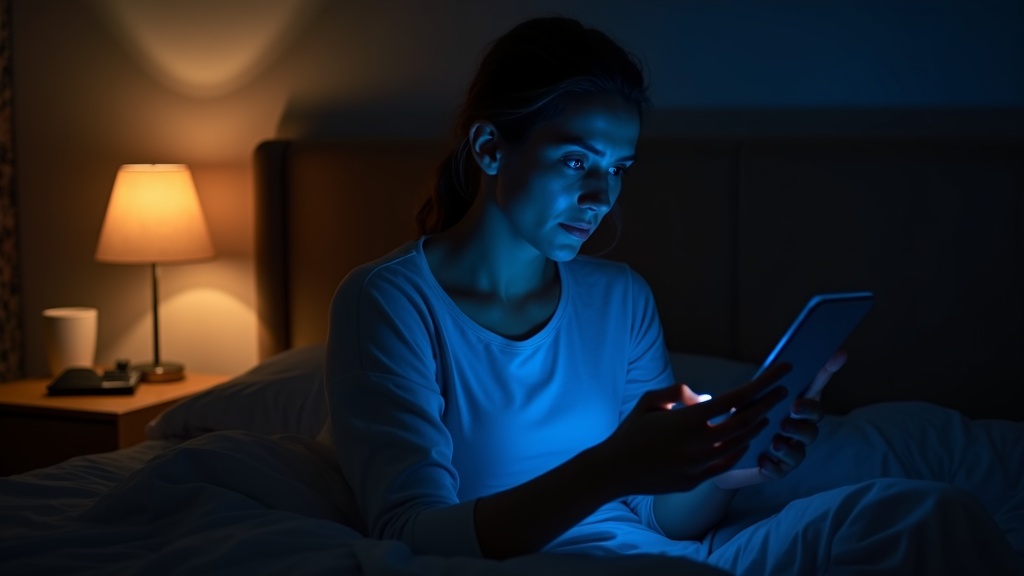
You’ve probably heard that looking at your phone before bed is terrible for your sleep. Then you read something saying it doesn’t matter that much. Then someone tells you to buy special glasses. Then a friend says they scroll through Instagram every night and sleep just fine.
No wonder everyone’s confused about blue light and sleep.
The truth is, blue light from screens really does affect your sleep, but not quite in the way most people think. And the solution isn’t as simple as blocking blue light or avoiding screens entirely, though those things can help some people.
What actually matters is understanding how your body decides when to feel sleepy and when to wake up. Light plays a huge role in that process, and blue light is just one piece of a bigger picture. Your evening routine, when you use screens, how bright they are, and what you’re doing on them all make a difference too.
The mixed messages you’re hearing aren’t necessarily wrong. They’re just incomplete. Some advice works great for certain people and barely helps others. Some research looks at extreme conditions that don’t match real life. And some recommendations ignore the fact that most of us aren’t going to ditch our phones entirely after dinner.
This article will help you understand what’s actually happening when blue light hits your eyes at night, why it matters for some people more than others, and what you can realistically do about it without turning your evening into a complicated ritual.
How your body decides it’s time to sleep
Your body runs on an internal clock that tries to keep you awake during the day and sleepy at night. Scientists call this your circadian rhythm, but you can think of it as your natural day-night timer. It’s always running in the background, influenced mostly by one thing: light.
When it gets dark outside, your brain starts releasing a chemical called melatonin. Think of melatonin as your body’s darkness signal. It doesn’t knock you out like a sleeping pill, but it does tell your system that nighttime is approaching and it might be time to wind down soon.
Here’s where screens come in. When your eyes see bright light in the evening, especially the kind that mimics daylight, your brain can get confused about what time it is. It might hold off on releasing melatonin because it thinks the sun is still up. For some people, this delay means they don’t start feeling sleepy until later than they normally would.
This doesn’t mean looking at your phone will ruin your sleep forever. The effect varies quite a bit from person to person. Some people are very sensitive to evening light and notice a real difference in how quickly they get tired. Others seem barely affected at all. The key point is that your brain uses light as its main cue for whether it’s day or night, and bright screens in the evening can send a daytime signal when you’re trying to shift into nighttime mode.
What blue light can do to sleep in the real world
The most common effect people notice is that they don’t feel sleepy when they normally would. You might be scrolling or watching something at your usual bedtime and realize you’re still wide awake, even though you’d typically be yawning by now.
What’s happening is that bright light, especially the kind screens produce, suppresses melatonin. Melatonin is the hormone that signals darkness to your body. When your brain gets less of that signal, it doesn’t prepare for sleep as reliably. You might not feel that drowsy pull that usually makes you want to turn in.
For some people, this means taking longer to fall asleep once they do get into bed. For others, it shifts their whole schedule later. They stay up longer because they don’t feel tired, then wake up groggy because they still need to get up at the same time. If this pattern repeats, sleep can end up shorter or lighter overall.
But the effects aren’t the same for everyone. Some people seem barely affected by late-night screens, while others notice a clear difference. Timing matters a lot. Using a screen in the early evening usually doesn’t interfere much. Using one right before bed, especially a bright one close to your face, is more likely to cause trouble.
Brightness is often more important than the color of the light. A dim screen in a dark room can still affect you, but it’s generally less disruptive than a blazing bright one. The label “blue light” gets a lot of attention, but what really matters is how much light hits your eyes and when.
Why screens get blamed even when blue light isn’t the whole story
When people say screens ruin their sleep, they usually mean blue light. But the light itself is only part of what’s happening. What you’re actually doing on your phone or laptop matters just as much, maybe more.
Think about it. You’re not just staring at a glowing rectangle. You’re scrolling through news that makes you angry, playing a game you can’t put down, answering work emails that stress you out, or watching a show that ends on a cliffhanger. Your brain doesn’t care that it’s bedtime. It’s busy reacting to what’s on the screen.
That mental engagement keeps you alert in ways that have nothing to do with wavelengths of light. An argument in the comments section will wind you up whether your screen is bright or dimmed. A tense thriller will keep your heart rate elevated no matter what color the pixels are.
There’s also the simple fact that screens make us stay up later. “Just one more episode” or “I’ll just finish this level” pushes bedtime back by twenty minutes, then forty, then an hour. You’re not losing sleep because of blue light at that point. You’re losing it because you’re still awake.
Even dim screens can keep people up if the content is activating enough. The light might nudge your circadian rhythm a bit, but the story you’re following or the argument you’re having is doing most of the work. Both things are real. Both affect sleep. But they work in different ways, and it helps to know which one you’re actually dealing with.
What makes blue light more or less disruptive
Not all screen time affects your sleep the same way. A big part of the confusion comes from the fact that context matters just as much as the blue light itself.
Brightness is probably the biggest factor. A phone held close to your face in a dark bedroom sends a lot more light into your eyes than the same phone used in a well-lit room. Your eyes adjust to whatever lighting is around you, so that glowing screen feels much more intense when everything else is dark.
Distance and size play into this too. Scrolling on your phone six inches from your face is very different from watching TV across the room. The closer and bigger the screen appears in your field of vision, the more it affects you.
Timing matters more than most people realize. Using screens earlier in the evening gives your body more time to recover before bed. But that same amount of screen time in the last half hour or hour before sleep can interfere much more directly with your wind-down process.
Then there’s the fact that people simply respond differently. If you’re naturally a night owl, you might handle late evening screens better than someone who’s wired to wake up early. Some people are just more sensitive to light in general.
This is why the advice you hear can seem all over the place. Someone dimming their tablet and watching from across the room at 8pm might have zero issues, while another person scrolling brightly in bed at midnight struggles to fall asleep. Same blue light, completely different outcomes.
What blue light glasses and screen filters can and can’t do
Blue light glasses and screen filters like Night Shift or Night Mode do what they claim on a basic level. They reduce the amount of blue light reaching your eyes. The glasses have lenses with a special tint, and the screen filters shift your display toward warmer, amber tones.
For some people, this helps. If you’re sitting in a dark room late at night staring at a bright screen, cutting down the blue light may make it easier for your body to start producing melatonin. You might feel sleepier sooner than you would with a regular screen blasting blue light at you.
But here’s what these tools don’t do. They don’t reduce the overall brightness of your screen unless you manually turn that down yourself. A bright amber screen is still bright. They also don’t change what you’re doing on the device. If you’re scrolling through stressful news or playing an intense game, your brain is still stimulated regardless of the color temperature.
The strength of these filters and glasses also varies a lot. Some barely make a difference. Others give everything a strong orange tint. There’s no standard level of protection, so what works for one person might do almost nothing for another.
Think of blue light glasses and filters as a small helpful adjustment, not a magic fix. They might take the edge off if you absolutely need to use screens before bed. But they won’t undo the effects of staying up too late, keeping your room too bright, or getting pulled into stimulating content right before you’re trying to sleep.
Common situations and what’s likely happening
You might fall asleep just fine after watching TV from across the room, but scrolling through your phone in bed keeps you wired for an extra hour. The difference isn’t just the blue light. Your phone is much closer to your face, so the light hitting your eyes is more intense. Plus, scrolling through social media or texts tends to keep your mind more actively engaged than passively watching a show.
Some people find they wake up at 3 a.m. after a late-night gaming session, even though they felt exhausted going to bed. Gaming combines bright screens with mental stimulation and often pushes your actual bedtime later than usual. Your body might fall asleep from pure fatigue, but the disrupted timing can lead to fragmented sleep hours later.
Working on a laptop in bed often leaves people feeling unexpectedly alert, even when they’re tired. Here, brightness plays a big role, especially if you’re working in a dark room with the screen at full blast. The contrast between the bright display and dark surroundings makes the light exposure more pronounced. And if you’re dealing with work stress or problem-solving, that mental activation doesn’t just switch off the moment you close the laptop.
Reading on a dim e-reader with a warm backlight usually feels different than scrolling a bright smartphone. The e-reader puts out less intense light overall, and if it has a warmer tone, it’s further from the blue end of the spectrum. The phone, especially at high brightness with a cool white screen, delivers a stronger signal that can interfere with your body’s wind-down process.





